Top videos

🔥 Support Pilot Blog on Patreon!
https://www.patreon.com/PilotBlog
❤️ Buy me a coffee: https://www.buymeacoffee.com/davydoff
✈️ Find me on PayPal :aviatorssecretary@gmail.com
✈ My Twitch: https://www.twitch.tv/captdeny
✈ My Kick: https://kick.com/captaind1
✈ My Spotify: https://open.spotify.com/show/....2WmgGeDN3iJOTQaAvzr6
✈ My Twitter (X) https://x.com/CaptainDeny
✈ Denys Davydov Telegram Channel:
https://t.me/pilotblog
✈ My Instagram: @denys_pilot
My name is Denys, and I am Boeing 737 Captain. Before I used to fly ATR 42/72.
I am making the videos on this Pilot Blog channel to encourage people all around the world to join our aviation community.
Here you'll see interesting aviation videos from pilot's perspective. Enjoy:)

#funny #boysbeingboys #boys #men #menwillbemen
Funny Videos Of Guys Being Dudes, ONLY Boys Will Understand. Boys Will Be Boys Compilation Memes
Subscribe Daily feed of men
FULL SERIES PLAYLIST: https://www.youtube.com/@DailyFeedOfMen2/playlists
• Boys Being Boys Funny Compilations
business: samvat1001@gmail.com
#funny #boysbeingboys #boys
Tags: boys will be boys, memes, funny, meme, boys compilation, boys being boys, only boys will understand, men being men, fails, funny videos, tiktok, tik tok, laugh, try not to laugh, you laugh you lose, meme compilation, funny compilation, tntl, ylyl, boys memes

David Hookstead talks about Shawn Ryan addressing Delta Force's code of silence.
Comment with your thoughts, make sure to like, subscribe and watch the full Tuesday night livestream here: https://www.youtube.com/watch?v=YR9w7E3YN-o
You can follow David Hookstead at the following:
Instagram: @david_hookstead
Twitter: @dhookstead

Former Delta Force operator Chris VanSant speaks with David Hookstead about his thoughts on SEAL Team 6.
Make sure to like, subscribe and comment with your thoughts!
You can follow David Hookstead at the following:
Instagram: @david_hookstead
Twitter: @dhookstead
Spotify: https://open.spotify.com/show/....0K13bLiIA43aRW1mo7aE
Apple podcasts: https://podcasts.apple.com/us/....podcast/outkicks-ame

Join this channel to get access to perks:
https://www.youtube.com/channe....l/UCsMSFwBF-4SWD5msA

Join this channel to get access to perks:
https://www.youtube.com/channe....l/UCsMSFwBF-4SWD5msA

Join this channel to get access to perks:
https://www.youtube.com/channe....l/UCsMSFwBF-4SWD5msA

“Something has to give. And we’re at breaking point, I think.”
Former senior military intelligence officer Philip Ingram joins Kevin O’Sullivan to discuss controversial remarks attributed to Falklands commander Major General Julian Thompson about firing on migrant boats.
The discussion follows Robert Jenrick’s comments that Royal Marines deployed into the Channel should be permitted to use lethal force if necessary, while stressing that his preferred approach is to pick people up and return them to France.
#ChannelCrossings #BorderSecurity #TalkTV
Have you got a story? Email tips@talk.tv
Click here for more from Talk https://talk.tv
If you need any help visit: https://talk.tv/helplines
Subscribe on YouTube: https://www.youtube.com/talktv?sub_confirmation=1

🔴 Become a member of Tousi TV+ at https://tousi.tv
📲 Download Tousi TV app — available on iPhone and Android.
🌎 Get access to The Situation Room: https://members.thesituationro....om.global/?ref=mahya
X: @TousiTVOfficial
Instagram: @TousiTV
TikTok: @TousiTVOfficial
🔴 JOIN Tousi TV+ for only £1 on a 7 day trial: https://tousi.tv
📲 Download the official Tousi TV app — available on iPhone and Android.
🛒 Tousi Store: https://www.tousistore.tv
💙 Support Mahyar via donation link: https://tousi.tv/support-us/
X: @TousiTVOfficial
Instagram: @TousiTV
TikTok: @TousiTVOfficial

🔴 Become a member of Tousi TV+ at https://tousi.tv
🛒 Want to work for Tousi TV? Look at our careers page: https://tousi.tv/careers
📲 Download Tousi TV app — available on iPhone and Android.
X: @TousiTVOfficial
Instagram: @TousiTV
TikTok: @TousiTVOfficial

Original here: https://www.youtube.com/live/p....pq9toSNWDQ?si=F0eBCK
Tousi TV livestream recording about Henry Nowak
💎 Help us expand the coverage! Subscription starts from just $4.99! Get 50% OFF full access to the map + exclusive strategic updates: https://www.rfunews.com/pricing
Today, there are dangerous updates from the Russian Federation.
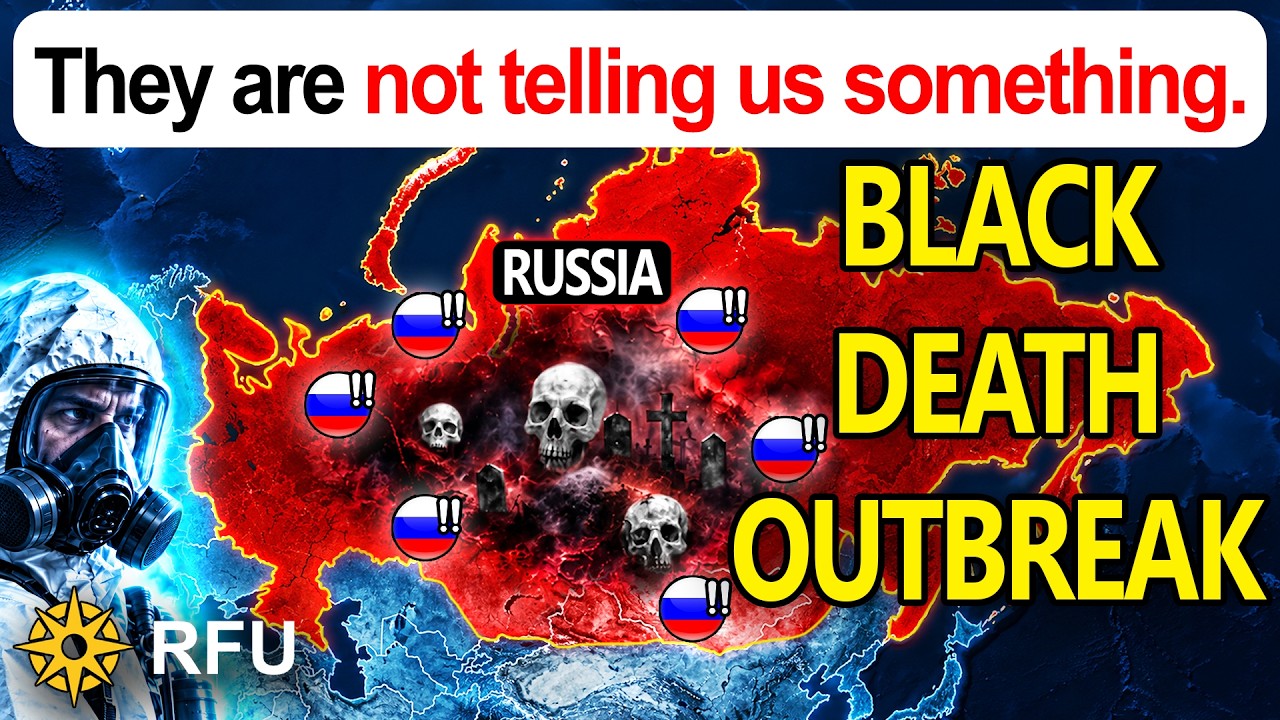
Here, Russia is facing an extraordinary plague outbreak in Siberia after a young laboratory worker died from a mysterious, severe pneumonia, and nearly two hundred potential contacts were placed under medical observation. Daria Shipilova, twenty-eight years old, worked at the Irkutsk Anti-Plague Research Institute and deteriorated rapidly after falling ill. The whole hospital was quarantined, public events were canceled, and Russia’s top public-health official Anna Popova traveled thousands of kilometers from Moscow to coordinate the response. Yet Russian authorities insist the regional situation remains stable, and that is where Russia’s story becomes increasingly strange.
According to the officially reported version, the lab official accidentally broke a test tube containing live plague bacteria while working. But Russian epidemiologist Mikhail Favorov publicly questioned that explanation, arguing that specialists handling dangerous pathogens work in protective equipment and describing infection through such an accident as unlikely. He also argued that the immediate arrival of the highest-ranking health officials in Russia indicates authorities were treating the situation extremely seriously, despite trying to project calmness to the public.
Russian authorities subsequently contradicted themselves and their own official laboratory-accident story, as they changed their version and stated that the woman died from pneumonia of unknown etiology, that testing found no microorganisms connected to her work, and that an investigation discovered no laboratory emergency involving dangerous pathogens.
Yet the precautions have been extensive, as nearly two hundred contacts were identified, several medical facilities introduced quarantine measures, preventive restrictions appeared elsewhere, and authorities launched an investigation. Meanwhile, officials initially avoided publicly identifying the suspected disease. One of the local leaders, Alexei Tsydenov, initially wrote that the woman had died from plague before subsequently modifying the statement to say she possibly had.
That combination has inevitably produced accusations of a cover-up, with the discrepancy obvious, as Moscow publicly minimizes the danger while simultaneously implementing measures appropriate for a potentially serious infectious incident.
The Kremlin has powerful reasons to prevent panic, as a genuine outbreak spreading beyond isolated contacts could force quarantines of whole towns, disrupt transportation and industrial production, consume medical resources, and create serious public anxiety at a time when Russian society is already on high alert as it feels the economic consequences of Putin’s campaign in Ukraine.
These consequences can become even more dangerous, as the Russian war machine depends upon enormous logistical networks moving soldiers, equipment, and ammunition across the country. A major infectious outbreak affecting transportation hubs, military facilities, or mobilization centers could interfere with troop rotations and training. Quarantines could remove personnel from duty, while outbreaks among tightly concentrated soldiers could temporarily disable entire formations, ending Putin’s war earlier than expected, as large-scale health restrictions would create another demand on government finances and manpower precisely when Moscow needs both elsewhere.
Overall, for the Russian government, controlling information may therefore become almost as important as controlling the medical situation. Russia has a long history of secrecy surrounding major disasters, from the nuclear power plant disaster in Chornobyl during the Soviet Union to the Kursk submarine sinking catastrophe, which Putin tried to hide at the beginning of his reign twenty-six years ago. Whether the event in Irkutsk ultimately proves to be a plague outbreak, another more common infection, or an isolated laboratory incident without major consequences, the conflicting explanations have already created precisely what the Kremlin would want to avoid: suspicion that the official story is concealing something considerably more serious. Something that could be the final nail in the coffin not only for Putin’s war against Ukraine but also for his regime.
🔴 YOU ARE MISSING HALF OF OUR VIDEOS! Subscribe to unlock all out reports and support our work: https://www.youtube.com/channe....l/UCcNB1tZYpeDetqCad
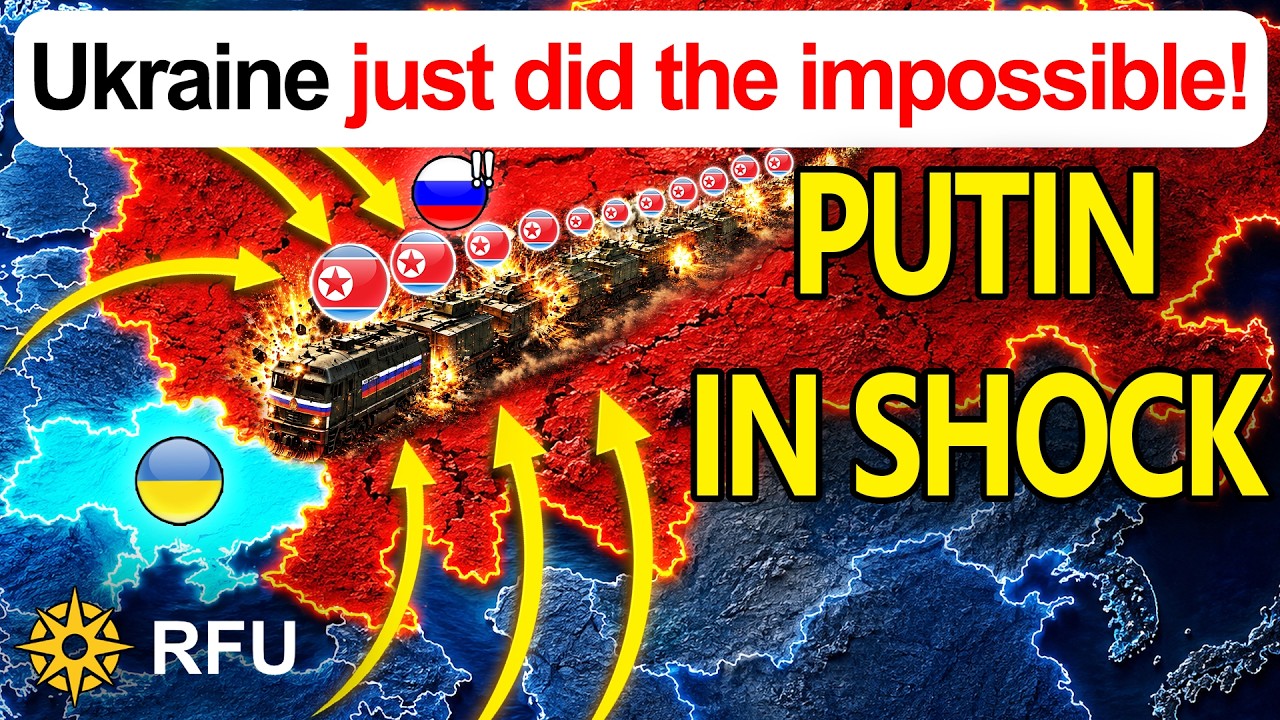
Today, Ukrainian army sources revealed a reported sabotage operation against a Russian military train carrying North Korean weapons that was targeted around six thousand kilometers from the frontline. According to Ukrainian military sources, simultaneous explosions destroyed a train transporting KN-Twenty-Three and KN-Twenty-Four ballistic missiles together with railcars loaded with artillery ammunition on the Trans-Siberian Railway. The attack occurred geographically much closer to North Korea than to Ukraine itself, and the resulting detonation destroyed the train, devastated part of the surrounding railway infrastructure, and halted traffic along the affected section. Official confirmation from Ukraine’s Main Intelligence Directorate has not yet been released, but once confirmed, this would rank among the deepest Ukrainian operations conducted inside Russian territory.
According to operatives within Ukrainian intelligence circles, the operation was preceded by a lengthy intelligence effort. The reported shipment was allegedly tracked from the vicinity of the North Korean border as it moved westward across Russia. Such an operation would have required establishing the train’s timetable, identifying where it would slow down, and selecting terrain where repairs after an attack would be particularly difficult. Ukrainian operatives have also needed to determine exactly which convoy contained the strategic cargo before committing valuable assets. Local assistance cannot be ruled out, as some remote Russian regions have long complained of economic neglect, potentially making discreet cooperation with outside intelligence services more feasible. Ukrainian agents would have also exploited the well-known corruption among the Russian administration, as such officials with access to railway schedules or cargo manifests could be bribed to reveal when a valuable shipment would pass a specific location. According to the reports, remotely controlled explosive charges were allegedly placed beneath the railway tracks and near critical points of the train before being detonated as it entered a difficult section of the line. Choosing such terrain aims to maximize destruction while making restoration substantially more complicated.
The effects of the explosion were dramatic, as they triggered a chain reaction that detonated the missile warheads and the accompanying ammunition cargo. The KN missiles carry a warhead weighing roughly five-hundred kilograms, meaning even a single detonation is capable of causing severe destruction. The exact number of missiles reportedly aboard the train has not been established yet, but the combined explosion reached the equivalent of dozens of tons of TNT, excavated a crater more than fifteen meters deep, and completely incinerated both the locomotive and the convoy. Burning fragments from solid-fuel rocket motors ignited surrounding vegetation and railway infrastructure.
The consequences extend well beyond the destroyed shipment, even though a Ukrainian intelligence source stated that the objective was to ensure none of the missiles intended for attacks on Ukrainian cities survived the operation. However, the Trans-Siberian Railway is Russia’s main east-west rail artery, stretching roughly nine-thousand-three-hundred kilometers from European Russia to the Pacific coast and connecting industrial centers with trade routes toward China, Mongolia, and the Korean Peninsula. It carries tens of millions of tonnes of freight annually, making it one of Russia’s most important logistical networks. Disrupting even one section can create delays of up to several weeks while damaged track, electrical systems, and wreckage are cleared and repaired.
Overall, the reported sabotage represents a direct Ukrainian response to the expanding North Korean military assistance to Russia, which includes missiles, launchers for them, artillery shells, and personnel for both the delivered systems and infantry. Destroying a huge single shipment would deny Russia valuable weapons immediately, while simultaneously damaging the railway itself could delay subsequent deliveries, increasing the logistical cost of relying on long-distance military support from North Korea.

💎 Special Offer: starting from just $4.99! Get 50% OFF full access to the map + exclusive strategic updates: https://www.rfunews.com/pricing
Russian convict soldiers have started to revolt against the very commanders responsible for forcing them into suicidal assaults, with some even executing officers and elite drone operators involved in killing their own men. The first incident involved a Russian soldier who was captured by Ukraine and admitted that he had murdered his own company commander during an earlier deployment. According to his testimony, constant abuse led him to shoot his commander and burn the body to hide the crime, although he was eventually arrested and sentenced to eight years in a maximum-security prison. Despite killing his commander, the Russian Ministry of Defense allowed the convicted commander-killer to leave prison after signing another military contract and sent him back to the front. By doing so, Russia knowingly rearmed a soldier who had already proven willing to kill his own officers, showing that finding more recruits had become more important than protecting its own chain of command.
The danger of this policy was not hypothetical, as another prisoner recruit soon turned his weapon against some of Russia's most valuable personnel. A Russian soldier who had previously served a twelve-year prison sentence before joining the army joined the Rubikon drone unit and opened fire on fellow troops in the Kharkiv region. The shooting killed six soldiers and wounded two others, including highly trained Rubikon drone operators. These specialists are difficult to replace and are deployed to Russia's most important offensive sectors. Their deaths represented that convict recruits are beginning to target the very personnel responsible for enforcing Russia's brutal system of control. Since Rubikon drone crews are frequently used to direct strikes against Russian soldiers attempting to retreat or surrender, they have become natural targets for troops seeking revenge against those killing their own comrades.
Another similar case occurred last year in the Zaporizhzhia region, showing a recurring response to coercive discipline and problems that Russians clearly do not try to solve. Here, a Russian soldier shot and killed the commander of his grenade launcher platoon while also wounding a sergeant. Together, these incidents reveal the same underlying problem as Russia is filling its ranks with convict recruits while relying on abusive commanders to control them through fear, beatings, and executions. Eventually, some of those soldiers stop obeying and instead turn their weapons against the officers and comrades enforcing that terror.
The reason this violence keeps emerging is that many Russian soldiers no longer want to fight but have virtually no safe way to escape the battlefield. Refusing orders can result in imprisonment, severe beatings, or execution. Desertion is prevented by military police and blocking detachments stationed behind frontline units, whose purpose is to arrest fleeing soldiers and force them back into suicidal assaults. At the same time, Russian drone operators monitor their own troops and direct artillery or FPV drone strikes against soldiers attempting to surrender to Ukraine. The goal is to convince everyone else that neither retreat nor surrender offers any chance of survival. Trapped between Ukrainian positions ahead and execution from their own side behind, some soldiers eventually decide that the only way to survive is to eliminate the men enforcing those orders.
Interestingly, Ukraine has recognized that these blocking detachments are essential to keeping unwilling Russian soldiers in combat and has begun deliberately targeting them. One recent strike destroyed a Russian military police armored vehicle belonging to a unit that had been heavily reinforced across Russian-controlled Donetsk specifically to prevent desertion. This reflects a broader Russian problem as constant suicidal assaults reduce morale, collapsing morale increases refusals and desertions, and those desertions force Russia to deploy even more blocking units to maintain discipline.
As Ukrainian strikes destroy military police vehicles, kill blocking detachments, and disrupt their patrols, gaps begin to appear in this system of coercion. Those gaps make desertion easier, and successful escapes can quickly encourage others to follow. Russia is then forced to divert additional soldiers, vehicles, and equipment away from combat operations simply to police its own troops. Meanwhile, the commanders, military police, and drone operators enforcing discipline become increasingly exposed as they are hunted by Ukraine and also by the Russian soldiers they are trying to control.
💎 Help us expand the coverage! Subscription starts from just $4.99! Get 50% OFF full access to the map + exclusive strategic updates: https://www.rfunews.com/pricing
Today, there are important updates from the Liman direction.
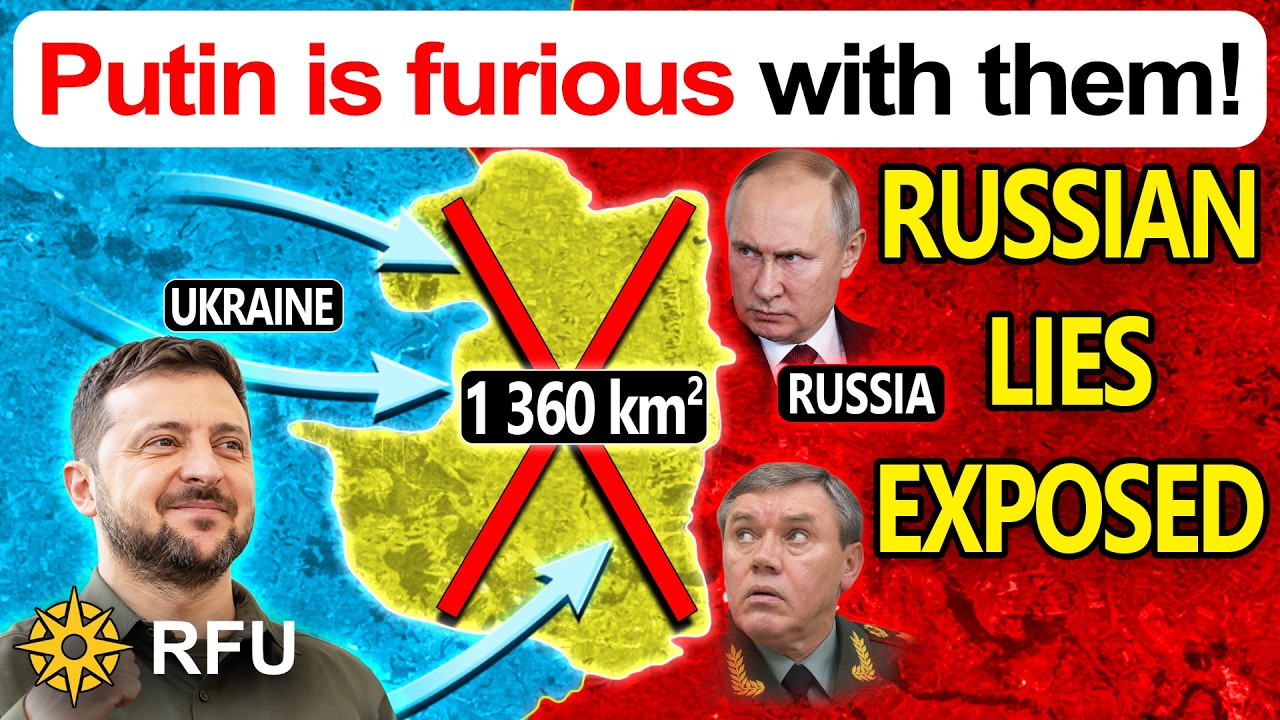
Here, the gap between Russian official maps and battlefield reality around Liman has become extraordinary, as Russian command maps place their furthest claimed positions roughly forty kilometers west of the actual frontline and attribute another one-thousand-three-hundred-and-sixty square kilometers to Russian control. Such claims are based on an apparently AI-generated video purporting to show a Russian soldier in Chervonyi Oskil, after which Russian sources claimed the settlement had been captured, causing reaction from Russian military analysts, who are increasingly criticizing this trend of exaggerated reporting.
That fictional picture has become increasingly difficult to preserve as Ukraine’s Operation Vivaldi advances. To counter this in the information space, Russia’s Western Grouping of Forces released footage supposedly demonstrating continued Russian presence in Nove, Ridkodub, and other recently liberated settlements by the Ukrainians. But analysts quickly identified indications that the footage was archival, with the videos filmed when Russian forces originally captured these locations in two-thousand-twenty-five, before Ukraine’s counterattack, showing vegetation inconsistent with current conditions. Another clip from Ridkodub showed a Russian soldier moving through the settlement while Ukrainian FPV drones pursued him, but visual comparisons placed the recording around August last year.
Russian military commentators have consequently begun attacking their own command’s response with the argument that the Ukrainian counterattack itself is less damaging than pretending it does not exist. Instead of acknowledging setbacks, determining why defenses failed and correcting them, Russian commanders publish old footage and maintain an increasingly fictional frontline, which creates consequences extending far beyond symbolic claims.
Russian soldiers witnessing Ukrainian advances while official channels insist nothing significant has happened have less reason to trust their commanders. Russian analysts have repeatedly warned that distorted reporting also damages battlefield decision-making: commanders can allocate reserves, artillery and drone coverage according to positions that exist on maps but not on the ground. The resulting disconnect can leave troops isolated and encourage demoralized soldiers to seek information elsewhere.
The real battlefield situation around Liman demonstrates why this matters, as Ukraine officially announced that its Third Army Corps has liberated settlement after settlement, releasing footage weeks after the events for operational security. The earlier penetration around Nove was particularly revealing, as the Ukrainian forces converted an old BTR into an unmanned explosive vehicle and managed to drive the relatively slow machine toward Russian defenses. Its ability to approach the target suggested Russian drone observation and fire control were not present there, because according to Russian maps, there was no threat to Ridkodub.
Now Ukrainian pressure is extending toward the Zherebets River. Russian sources themselves have acknowledged Ukrainian activity around crossings and positions near Terny, while Ukrainian strikes against crossing points and rear logistics are complicating Russian resupply. Every restricted crossing creates another bottleneck where vehicles, ammunition and reinforcements become vulnerable to drones.
Yet Russian information management continues trying to preserve a battlefield picture increasingly contradicted even by Russian analysts. After losing substantial territory and suffering significant casualties, commanders are still releasing archival or AI-generated footage and defending claims built upon earlier exaggerated advances.
Overall, Russia may claim that the Lyman front has stabilized, but fighting remains active around the Zherebets approaches, with Ukrainian infiltrators crossing the river for quick raids. Ukraine is simultaneously applying ground pressure, attacking the crossings methodically and disrupting Russian rear logistics. The widening distance between Russia’s declared frontline and the battlefield itself is therefore becoming more than an information problem: it risks actively undermining Russia’s ability to organize the defense it now urgently needs to stop Ukraine’s counteroffensive and to prevent the Russian defense line behind the river from collapsing completely.

💎 Special Offer: starting from just $4.99! Get 50% OFF full access to the map + exclusive strategic updates: https://www.rfunews.com/pricing
After recent offensive action in the Dnipropetrovsk sector, Ukraine's Skala special assault Regiment achieved a massive breakthrough and cleared seventy-five square kilometers of the grey zone, while pushing Russia's area of control back significantly further. The regiment reports that this is one of the most significant offensive operations by Ukrainian forces this summer. They report that Russian defenders in the sector have suffered a critical number of casualties, as well as losing several key deployment points and access routes necessary for their continued operations in the area.
This massive operation began shortly after Ukrainians already advanced over four-hundred square kilometers in the area earlier this year. After Russian lines broke, their high command urgently redeployed a significant number of forces to halt the Ukrainian advances; one of which was the one-hundred-twentieth Marine Infantry Brigade, along with even the full ninetieth Russian tank division, numbering an estimated total of over thirty-thousand enemy soldiers. Because of these reinforcements, Ukraine's advance was forced to halt, as any attack against such an overwhelming force would have been disastrous; So, the Skala special assault regiment had to find a way to remove the Russian equipment and marines from the equation, and allow Ukrainians to continue retaking the initiative.
This is why Ukrainian drone operators started the three-day-long Ashan operation, which was a larger concentrated drone campaign aiming to destroy Russian heavy equipment, as you may remember from a previous report. Among the targets were artillery pieces, such as the North Korean Koksan self-propelled artillery system, which deprived the arriving Russian soldiers of fire support that could have been used against advancing Ukrainian soldiers. After that, Ukrainian drones started targeting armored personnel carriers, which reduced their mobility. Then, Ukraine struck Russian soldiers to reduce the Russians’ manpower before they could be sent to the frontline to stop the Ukrainian advance. To disrupt the logistics of the already present enemy soldiers along the front, Ukrainian operators struck multiple Russian military trucks as well, simultaneously denying supplies and reinforcements for the Russians. As a result of the Ashan operation in this sector, Ukrainian drones destroyed one hundred and seven pieces of equipment in just three days and removed a substantial part of Russia’s firepower, transport, and logistics supporting the marine reinforcements.
To defend their land-based logistical routes before advancing, Ukraine has installed forty-two kilometers of anti-drone protection along roads in the Dnipropetrovsk region. These anti-drone nets allowed ammunition, reinforcements, and assault groups to move through the rear without every convoy being exposed to Russian FPV drones, while Russian equipment and supply traffic had been devastated. After these preparations, dozens of assault groups launched a simultaneous offensive from the Velykomykhailivka area with round-the-clock drone support. The Skala regiment first pushed through Ternovate and, after clearing it, moved towards the south, supporting the southern vector. Along this route, Ukrainian assault troops pushed towards Zaporizke and secured the right flank of the attack towards Ternove. At the same time, Ukraine expanded the breach north of these villages and captured Sichneve. This allowed the Ukrainians to use it as a springboard and advance even further eastward and attack Maliivka.
During the operation, Ukrainian reconnaissance drones identified Russian positions and targeted them with artillery, suppressing known firing positions before Ukrainian assault groups entered the settlements. This attack was further supported by FPV drones, which struck Russian soldiers who tried to hide after the artillery barrage. Additionally, heavy bomber drones attacked the scattered Russian soldiers by dropping ordnance on them. Russia tried to send reinforcements, but their armored vehicles were destroyed on the move by drones, eliminating them before they could help the defending Russians.
As a result of the attacks, Ukraine erased the Russian line as they advanced up to ten kilometers into Russian-held territory, liberating seventy-five square kilometers. This enabled Ukrainian forces to extend the reach of their drone operations and establish fire control over key Russian logistics routes in this sector.
This is what happened to Russia’s one hundred and twentieth Marine Infantry Brigade, which served as a reinforcement and suffered critical losses, rendering it combat ineffective. This forced the surviving elements to withdraw from the Dnipropetrovsk region, which is exactly what Ukraine needs to continue offensive operations

The U.S. military says all American troops have now left Iraq, officially ending a 12-year mission focused on fighting ISIS. The final U.S. forces departed the last air base in northern Iraq under an agreement between Washington and Baghdad. The withdrawal comes as the U.S.-Iran war continues, with fighting and tensions at times spilling over into Iraq.
A cockpit incident onboard an Israeli plane lead to a hijacking scare causing the plane to be diverted. Israeli Prime Minister Netanyahu's office says "The incident is under control, and all measures are currently being deployed in order to return the Israeli passengers safely to Israel."
Subscribe to LiveNOW from FOX! https://www.youtube.com/liveno....wfox?sub_confirmatio
Where to watch LiveNOW from FOX: https://www.livenowfox.com
Follow us @LiveNOWFOX on TikTok: https://www.tiktok.com/@livenowfox
Raw and unfiltered. Watch a non-stop stream of breaking news, live events and stories across the nation. Limited commentary. No opinion. Experience LiveNOW from FOX. Live news streaming channel when and where you need it.

Rep. Ilhan Omar's home was raided by DHS in fraud probe. HSI Agents are outside Rep. Omar's home at this time.
Subscribe to LiveNOW from FOX! https://www.youtube.com/liveno....wfox?sub_confirmatio
Where to watch LiveNOW from FOX: https://www.livenowfox.com
Follow us @LiveNOWFOX on TikTok: https://www.tiktok.com/@livenowfox
Raw and unfiltered. Watch a non-stop stream of breaking news, live events and stories across the nation. Limited commentary. No opinion. Experience LiveNOW from FOX. Live news streaming channel when and where you need it.

President Trump announced on Truth Social that Katie Zacharia will begin her term as the new White House Press Secretary on Tuesday. She is expected to hold her first press briefing at 9:30 am eastern time Tuesday.
"I am pleased to announce that Katie Zacharia will be beginning her term as Press Secretary tomorrow, Columbus Day, and will be doing an introductory News Conference on Tuesday at 9:30 A.M. from the Press Briefing Room in the White House. Katie has been with me, in spirit, from the very beginning, and will do a fantastic job!" said Trump.
Subscribe to LiveNOW from FOX! https://www.youtube.com/liveno....wfox?sub_confirmatio
Where to watch LiveNOW from FOX: https://www.livenowfox.com
Follow us @LiveNOWFOX on TikTok: https://www.tiktok.com/@livenowfox
Raw and unfiltered. Watch a non-stop stream of breaking news, live events and stories across the nation. Limited commentary. No opinion. Experience LiveNOW from FOX. Live news streaming channel when and where you need it.
