Najbolji videi
💎 Help us expand the coverage! Subscription starts from just $4.99! Get 50% OFF full access to the map + exclusive strategic updates: https://www.rfunews.com/pricing
Today, there are important updates from the Liman direction.
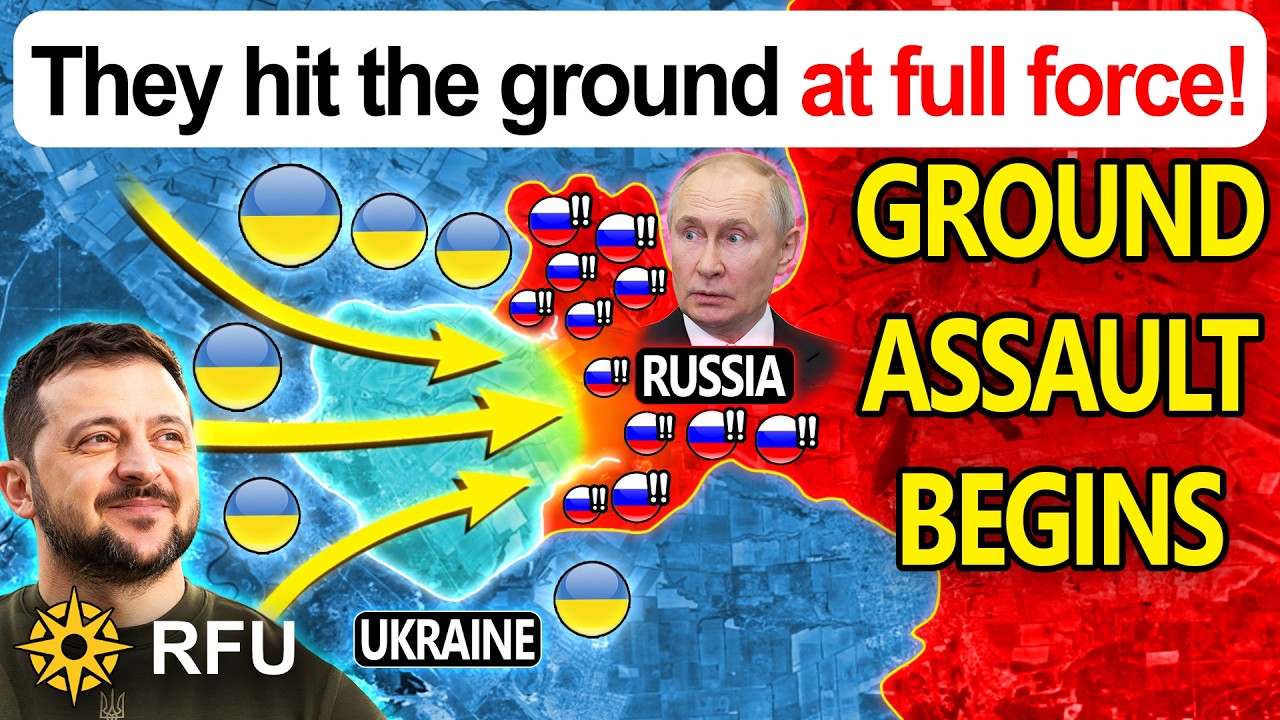
Here, Ukraine has released the first ground-combat footage from Operation Vivaldi, finally showing how the opening assaults north of Liman unfolded. The delay itself reveals an important element of the operation, as Ukrainian commanders maintained an information blackout throughout the summer, avoiding footage that could expose assault routes, units, or objectives before the offensive developed sufficient momentum. Only after the Russian salient collapsed did Ukraine begin showing how it happened.
The footage begins with armored vehicles carrying small Ukrainian assault groups toward Novoselivka during the early morning. The timing provided surprise, while fog around nearby rivers reduced Russian drone visibility. However, Russian drones still attacked the Ukrainian vehicles, but explosions failed to stop them and they moved forward. Then the Ukrainian infantry dismounted near Novoselivka while the vehicle-mounted machine guns suppressed Russian positions in the first houses.
The assault troops immediately entered the buildings, firing into rooms and clearing them and the basements with grenades. Once positions were secured, additional Ukrainian groups started moving through the surrounding forests toward the Nitrius River, where they encountered concealed Russian positions. Ukrainian infantry eliminated some of the Russians while others surrendered. Inside Novoselivka, more Russian soldiers were given the choice to surrender as Ukrainian reconnaissance drones watched overhead and provided live directions.
The Russian prisoners themselves became another intelligence source, as after one engagement, they revealed additional positions deeper inside the forest. Ukrainian troops requested drone fire support and continued clearing hideouts sequentially. One captured group carried a Russian flag, reportedly intended for an infiltration mission in which soldiers would photograph themselves displaying it as evidence that another location had supposedly been captured.
Elsewhere in the forest, abandoned Russian positions contained weapons and equipment, which prompted a Ukrainian soldier to launch a reconnaissance drone directly from the assault group and discover an enemy trench ahead. This enabled the Ukrainian troops to surprise two Russian soldiers there and additional forest positions were subsequently cleared, while wounded Ukrainian personnel were evacuated by a medical team using an ATV. Together, the assault teams cleared Novoselivka and secured the flank before they crossed the river and cleared Shandryholove, expanding the breakthrough beyond Russia’s previous defensive barrier.
Tactically, Vivaldi demonstrates how offensive warfare has changed, as large armored formations concentrated inside the drone kill zone become easily detectable targets. Ukraine instead used armor selectively, as vehicles transported infantry rapidly and provided suppressive fire before small assault groups continued predominantly on foot.
The decisive system was the reconnaissance-strike chain surrounding those soldiers, as Ukrainian drones searched ahead, identified Russian positions, directed infantry, and delivered strikes when resistance was discovered. Infantry then consolidated and cleared what remained, which led to Vivaldi mirroring and upgrading Russia’s infiltration tactics while integrating them into a coordinated counteroffensive.
At the same time, the assault north of Liman also became an information-war lesson reminiscent of Kupiansk. By late last year and two-thousand-twenty-six, Russian military analysts themselves increasingly complained about territory being captured on credit, as Russian infiltrators photographed flags, settlements were reported secured prematurely, and headquarters subsequently planned operations around those claims, often shooting their own attacking forces in the leg by doing so. At Liman, Ukraine exploited the opposite philosophy, so while Russian reports traveled upward presenting an increasingly optimistic battlefield picture, Ukraine remained deliberately silent, while Russian false reports had operational consequences as Russian artillery or drones reduced strikes against territory headquarters incorrectly considered Russian-controlled, while reinforcements received orders based on inaccurate maps.
Overall, operation Vivaldi consequently succeeded on two interconnected levels, as Ukrainian forces systematically cleared the Russian salient while the Ukrainian command refused to reveal the operation prematurely. Only after the wider salient had been cleared did the footage of the clearance of the first settlements emerge.

🔴 Our interactive news map: https://www.rfunews.com/map
🔴 Subscribe to unlock full access to the map + exclusive strategic insights: https://www.rfunews.com/pricing
Today, there is dangerous news from the Baltics.
Here, the Russian Federation accused the Baltic States of participating in Ukraine’s drone strike campaigns against Russia. In a shocking statement, Russia has openly identified all Baltic states as their next legitimate targets.
Recently, Russia stated at the United Nations Security Council that Ukraine has started using the territory of the Baltic states as a launching ground for strikes on Russia. According to their claims, Kyiv is using air corridors over the Baltic states and also intends to launch drones directly from their territory. Russia uses this narrative to redefine Baltic countries as participants in the war and as a fabricated pretext to justify further escalation.
Russia also claimed that personnel from the Ukrainian Unmanned Systems Forces have already been deployed to Latvia and are stationed at the Latvian military bases in Adazi, Selija, Lielvarde, Daugavpils, and Jekabpils. By stating this, Russia is deliberately turning them into identifiable military targets and preparing an informational justification for future threats, warning that, under such circumstances, a retaliatory strike would be inevitable. Additionally, they escalated their threats by stating that they know the coordinates of the decision-making center in Latvia, and it’s Nato membership would not protect it.
The Russian threats follow several cases since March in which Ukrainian military drones strayed into Nato airspace over Finland and the Baltic. In reality, these drones were diverted by Russian electronic warfare measures, which distorted their navigation system to switch them away from Russia. By exploiting these events, Russia tries to cause a rift between the Baltic states and Ukraine, while also using them as a pretext to accuse them of enabling Ukrainian strikes from their territory. Based on the flight paths of the drones, sudden deviations toward the Baltic states occur mid-flight en route to Russia rather than near launch points, undermining Russia’s claims that the drones originate from the Baltic.
Notably, Latvia’s armed forces reported multiple drone incursions into Latvian airspace, with at least one of them occurring from Russian territory, and two confirmed drone crashes on Latvian territory. As a result, Latvia’s defense minister resigned because the country’s counter-drone systems had failed to respond quickly enough, showing that Baltic states are now treating these incursions as a major national security issue. Following these events, Russia escalated even further as another drone entered and later exited Latvian airspace. This prompted Nato to activate fighter jets, deploy additional air defense units to Latvia’s eastern border, and issue a public drone threat warning for residents, advising civilians to seek shelter.
Soon after, a Nato military jet in southern Estonia shot down a drone that entered its airspace for the first time, marking a major escalation threshold. Defense Minister Hanno Pevkur stated that it was likely a Ukrainian drone flying toward targets in Russia, which fits into Russia’s pattern of diverting incoming Ukrainian drones to later use them to fabricate lies and blame the Baltic states.
Despite these incidents and the fact that drone flight paths can be traced, Russia continues to claim that Ukrainian drones are being launched from the Baltic states. Both Ukraine and Latvia have rejected the Russian intelligence allegations that Riga permitted Ukrainian drone launches from Latvian territory, although Russia continues pushing the accusation to justify further escalation.
To respond to the Russian threats, the Baltic states are signaling that any Russian strike against them would be met with a severe response, including strikes on Russian military infrastructure in Kaliningrad. The Russian enclave doesn’t have a land connection to Russia, and it can only be supplied by the Baltic Sea, which Nato dominates, making Kaliningrad highly vulnerable. The statement marks one of the strongest public warnings issued by a Nato member state so far and appears to be a direct response to Russia’s false allegations. The Lithuanian Foreign Minister stated that Nato must demonstrate that the alliance is capable of capturing Kaliningrad and destroying Russian air defense positions and missile systems stationed there, which are strategically located for regional power projection, putting major European capitals in their crosshair.
Overall, with Russia spreading disinformation and actively portraying Baltic military bases as legitimate targets, escalation is now firmly on the rise in the region. At the same time Nato countries are signaling they will respond in kind, publicly discussing strike scenarios against Russian territory in case of a Russian attack.

🔴 YOU ARE MISSING HALF OF OUR VIDEOS! Subscribe to unlock all our reports and support our work: https://www.youtube.com/channe....l/UCcNB1tZYpeDetqCad
Today, the biggest news comes from the Russian Federation.
Russians are pulling their tanks and other armored vehicles out of Ukraine and back into their massive stockpiles in the rear. Satellite footage and independent analysis show modern T ninety tanks and BTR eighty-two armored vehicles filling up military storage depots all across western and northwestern Russia. Notably, Russia has completely abandoned the idea of armored warfare in Ukraine due to the drone kill zone detecting and intercepting any and all heavy vehicles several kilometers before they reach the front. While this has caused Russia to overly rely on massed infantry assaults and infiltrations that cost them tens of thousands of lives every month, their losses of modern armored vehicles have dropped significantly. Notably, most destroyed Russian tanks are now predominantly older Soviet-era variants like the T fifty-five and the T sixty-two, being used as mobile artillery guns or heavily uparmored assault vehicles. However, Russian production numbers for more modern armored vehicles must go somewhere if not to the battlefield in Ukraine, and as of right now they're building everything up on Nato’s border instead.
Notably, the pattern has been observed in the western and north-western regions of Russia near Nato’s border. Here, Russia is planning a base to house an entire division only eleven kilometers from Norway's borders. Additionally, Russia is filling up its storage base in Buy, which is located five hundred kilometers from the borders of Estonia and Latvia. However, as Russia cannot pull out more armored vehicles from storage to refit them, it is rebuilding its stockpiles with its most modern variants, such as the new T-ninty tank and BTR-eight-two models. Russia’s rate of production didn’t stop, which means Russia can fill its storage bases again with approximately three hundred T-ninty tanks and up to four hundred BMP-three models annually. Simultaneously, artillery depots are also being restocked with Msta-S self-propelled guns and Malva self-propelled guns in Karelia, approximately one hundred and eighty-five kilometers from the Finnish border. Notably, Russia could be building up its armored reserves to potentially take advantage if the static frontline in Ukraine breaks. However, Estonian Defense Minister Martin Gereim stated that its abundant intelligence reports show that Russia will inevitably test the border on one of the Baltic countries, and it cannot be ruled out that the newly deployed tanks and artillery pieces will also be used in these Russian provocations, especially given the location of the equipment buildup.
It’s important to note that the immense Russian investments made into gearing their industrial base toward a protracted war are another significant factor explaining the buildup. A sudden halt in the production of military equipment because they are no longer used on the battlefield in Ukraine would likely lead to the collapse of the Russian economy. This means that Russia is now forced economically to continue the production of tanks and armored vehicles, which serves as an incentive for Russia to prolong the war and even begin a new one to prevent the Russian economy from collapsing, again explaining the decision to house these newly produced vehicles right on the border with Nato.
Overall, Russia’s decision to rebuild its armored reserves suggests that Moscow is preparing for a future in which its military needs more than just infantry and drones to achieve its objectives. Even if these vehicles cannot survive large-scale assaults on today’s battlefield, they could become a serious threat if Russia identifies weaknesses in Nato’s defenses or finds a way to reduce the effectiveness of drones. The greater danger is that Russia’s war economy is creating a cycle in which continued military production requires continued confrontation, making a lasting peace increasingly difficult to achieve. For Europe, this means that the end of the war in Ukraine would not necessarily mean the end of the Russian military threat, but could instead give Moscow the opportunity to rebuild its forces for its next confrontation.

💎 Help us expand the coverage! Subscription starts from just $4.99! Get 50% OFF full access to the map + exclusive strategic updates: https://www.rfunews.com/pricing
Today, there is interesting news from the Liman direction.
Here, Ukrainian troops have crossed the Zherebets River at several points, putting Russian forces north of Liman in an increasingly dangerous situation, as even Russian military bloggers are now alarmed about the development. This effectively confirms that Ukraine has consolidated the settlements on the western bank after eliminating the Russian salient there. Ukrainian units are now pushing from Ivanivka into Terny and Novosadove, from Novoliubavka toward Nevske, and operating around Zarichne in the direction of Torske.
The crossing toward Terny is particularly important because it seals off the Russian pocket in Kolodiazi, where more than one hundred Russian soldiers remain trapped after the wider Russian withdrawal attempt. Previously, they theoretically retained the possibility of escaping east toward the river, even though at great risk of Ukrainian drone fire. Ukrainian troops operating beyond the Zherebets can now threaten those routes from the opposite bank, leaving the remaining Russians without any chance of withdrawal.
At the same time, Russian analysts acknowledge serious problems for their forces, like their depleted formations fighting against fresher Ukrainian assault units, and the lack of effective supplies due to the intense Ukrainian drone activity around river crossings. However, the Russian command appears to be underreporting the severity of the collapse, which only makes things worse for the Russian forces on the ground. The advancing Ukrainian forward units have not yet encountered the concentration of Russian air and drone strikes expected against a major breakthrough, as they are penetrating territory still considered by the Russian command to be a relatively safer rear.
This threatens Russian drone detachments positioned behind the former frontline, which contain highly trained operators whose loss would be considerably more damaging than losing ordinary infantry. If Ukrainian assault groups reach their positions, Russia could simultaneously lose personnel, equipment, and drone fire support needed by nearby formations.
The consequences would be especially serious for the Russians still trapped west of the river. Drone deliveries cannot sustain an isolated force indefinitely, but they can transport ammunition, food, medicine, and batteries. Destroying or displacing Russian drone teams would therefore remove even this limited lifeline.
There is also another opportunity for Ukraine to exploit, because when a frontline moves rapidly, drone units need time to relocate, establish communications, position reconnaissance platforms, and rebuild the reconnaissance-to-strike kill chain. Russia should now be doing exactly that east of the Zherebets. Instead, attempts to soften the scale of the defeat for Russian audiences create further confusion inside the command structure. As Russian commanders continue working from maps showing lost territory as Russian-controlled, they issue orders based on a battlefield that no longer exists. Drone teams remain in supposedly safe positions, artillery receives incorrect targeting restrictions, and reserves are directed toward strongpoints already bypassed by Ukrainian troops, making them easy prey for ambushes both from the ground and the air.
Ukraine crossing the river itself suggests Russian defenses have not reorganized quickly enough. Ukrainian commanders generally avoid committing assault infantry across major obstacles without sufficient reconnaissance and support, so moving beyond the Zherebets indicates they see an opportunity to exploit Russian disorganization before a coherent defensive line emerges, with Ukrainian troops already appearing behind what Russia expected to become its next defensive barrier.
Overall, Russia’s effort to minimize the loss of its western Zherebets salient is helping produce another crisis, as Ukraine has not merely captured an abandoned bridgehead, but its assault groups are already crossing the obstacle the Russian command needed to stabilize behind. If Russian drone units can't be relocated on time to establish a new kill chain, Ukrainian infiltrations can lead to the establishment of footholds before organized resistance develops. That would transform into a broader breakdown of Russian lines and potentially threaten the other remaining Russian approach toward Liman.

هر روز صبح با خبر اعدام بیدار میشویم. امروز، ۱۳ مهر، علیرضا سپاهی و علیرضا رئیسی، دو متهم پروندهٔ «میدان علیخانی» اصفهان و از معترضان خیزش دی، در زندان دستگرد اعدام شدند. علیرضا سپاهی یک روز پیش از اعدام، در زندان با نامزدش، مهشاد کشانی، ازدواج کرد؛ زنی که خودش با حکم پنج سال زندان روبهروست. حدود دو ماه پیش، قرار بود علیرضا را همراه پسرعمویش اعدام کنند، اما او پیش از انتقال سکته کرد. پسرعمویش همان روز اعدام شد و علیرضا، ۶۹ روز بعد و یک روز پس از ازدواجش، اعدام شد.

ساندیتایمز گزارش داده است دو پنتهاوس لوکس مرتبط با شبکهٔ مالی مجتبی خامنهای، در ساختمانی مشرف به کاخ کنزینگتون لندن، برای فروش گذاشته شدهاند؛ دو ملکی که مجموعاً نزدیک به ۳۶ میلیون پوند خریداری شدهاند.
کامبیز حسینی در «برنامه» به این موضوع میپردازد.

«برنامه» صدای شماست.
اگر در ایران به اینترنت دسترسی دارید، بیایید و مشاهدات خود را بگویید.
ما شما را، بدون نوبت، مستقیم از ایران روی خط میآوریم.
بیایید و روایت خود را برای همیشه ثبت کنید.
تاریخ با صدای شما نوشته میشود.

در یک ماه گذشته، برای پیدا کردن کدام دارو یا دریافت کدام درمان با مشکل روبهرو شدهاید؟ دارو پیدا نشد، قیمتش چند برابر شد یا بیمه هزینهاش را نپرداخت؟ آیا ناچار شدهاید دارویتان را کمتر مصرف کنید، درمانتان را عقب بیندازید یا برای خرید دارو از پول غذا، اجاره یا مخارج بچهها بزنید؟ امشب در «برنامه با کامبیز حسینی»، صدای شما موضوع اصلی است.

یک شب مانده به چهارمین سالگرد قتل حکومتی مهسا ژینا امینی، گزارشهایی از بازگشت گشت ارشاد و نیروهای لباسشخصی به خیابانها منتشر شده است. خیابانهای شهر شما چه وضعی دارند؟ آیا شهر را قرق کردهاند؟
امشب در «برنامه»، تصویر خیابانها را از زبان خود مردم میشنویم.

قیمت بنزین با کارت جایگاه یکشبه دو برابر شد؛ از پنج هزار تومان به ۱۰ هزار تومان رسید. اما این گرانی سر پمپ نمیماند؛ به کرایهها، قیمت کالاها، دخل رانندهها و سفرهٔ همهٔ مردم میرسد.
گرانی بنزین کجای زندگی شما را هدف میگیرد؟
ما در «برنامه با کامبیز حسینی» بهدنبال روایتهای واقعی از زندگی مردم هستیم تا صدای واقعی مردم ایران را بازتاب دهیم.

امشب در «برنامه»، موضوع را شما تعیین کردید. از زندگی این روزها در شهر و محلهتان گفتید؛ از نگرانیها، امیدها و مطالبههایی که باید شنیده شوند. شما اگر فقط فرصت گفتن یک جمله به ایران را داشتید، چه میگفتید؟

آموزشوپرورش در چرخهای از اختلال گرفتار شده است. مهر ۱۴۰۵ از راه میرسد و هزینههای سنگین مدرسه و خطر بازماندن کودکان از تحصیل، خانوادههای بسیاری را نگران کرده است. هزینهٔ تهیهٔ لوازم مدرسه برای یک دانشآموز به ۱۵ میلیون تومان رسیده؛ رقمی که برای بسیاری از خانوادهها بهمعنای حذف یکی دیگر از نیازهای زندگی است. تصویر بحران آموزش ایران را در این «برنامه با کامبیز حسینی» ببینید.

در کرمان قرار بود بنزینِ مازاد بر سهمیه با نرخ لیتری ۸۷ هزار و ۲۰۰ تومان عرضه شود؛ این طرح پیش از آغاز فروش متوقف شد، اما بحث «نرخ چهارم» همچنان روی میز است. به نظر میرسد حکومت راهی جز افزایش قیمت بنزین ندارد؛ اما اگر بنزین دوباره گران شود، مردم چه خواهند کرد؟

چرا موجودی حساب برخی از مشتریان بانک ملی صفر شده است؟ اختلال فنی یا دستدرازی به پول مردم؟ «برنامه با کامبیز حسینی» امشب صدای مردمی است که از نظام بانکی جمهوری اسلامی آسیب دیدهاند.

امشب، در ادامهٔ گفتوگوی مردم با یکدیگر، شاهد تریبون آزاد «برنامه» هستید.

پولتیک برنامه ای است ویدئویی و آنلاین با اجرای کامبیز حسینی.

#Iraninternational #ایران_اینترنشنال

تجمعی که برای «خودجوش» شدنش به مداح، بلندگو، دوربین تلویزیون، پذیرایی و خیابان اختصاصی نیاز دارد، دیگر خودجوش نیست؛ فنکلاب حکومتی است!
مسئله، حق تجمع نیست؛ تجمعکردن حق همه است. مسئله، تبعیض است: چرا طرفداران حکومت میتوانند با حفاظت کامل خیابان را ببندند، اما پاسخ مردم معترض باتوم، بازداشت و گلوله است؟
مردم ایران دربارهٔ این تجمعهای شبانه چه میگویند؟
کامبیز حسینی در «برنامه» به این موضوع میپردازد.
«یک ایران صدای شما را میشنود»
دوشنبه تا پنجشنبه ۱۱ شب تهران
از تلویزیون ایران اینترنشنال

«برنامه» بعد از یک هفته، امشب روی آنتن برگشت و یک «تریبون آزاد» دیگر را برای مخاطبان میزبانی کرد.

شاید هرگز رقم واقعی هزینههای مراسم تشییع علی خامنهای منتشر نشود؛ اما آنچه دیدیم، فقط یک مراسم خاکسپاری نبود. چند روز تعطیلی، بسیج گسترده نیروهای امنیتی، تبلیغات حکومتی و نمایشی از قدرت که قرار بود این پیام را منتقل کند که حکومت همچنان قدرتمند است. به نظر شما، حکومت چه پیامی میخواست بدهد و مردم چه پیامی از این مراسم گرفتند؟
