সর্বশেষ ভিডিও
🔴 Our interactive news map: https://www.rfunews.com/map
🔴 Subscribe to unlock full access to the map + exclusive strategic insights: https://www.rfunews.com/pricing
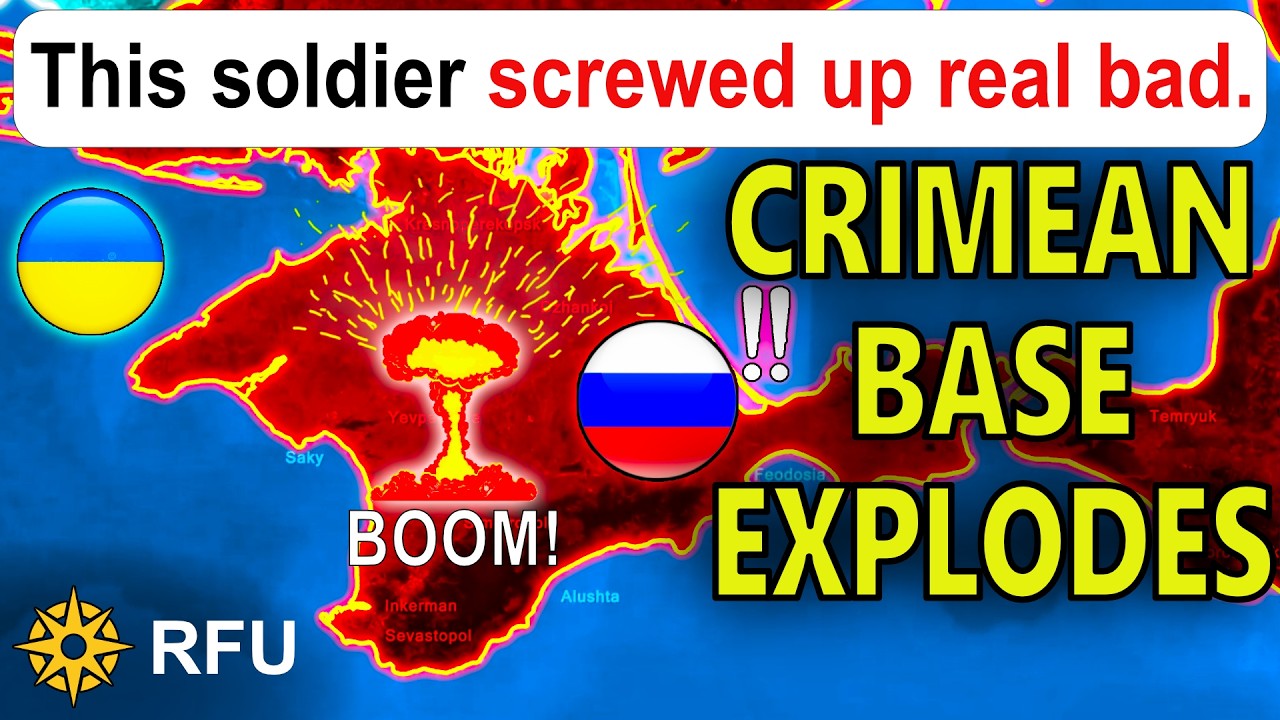
Today, the biggest news comes from Crimea.
Here, a Russian soldier screwed up by posting a selfie on social media, showing himself in secret place designated for the Russian military. What followed sent shockwaves through the Russian rear and obliterated on the most important Russian secret services base.
Recently, Ukrainian kamikaze drones struck a headquarters of the Russian Federal Security Service and an arms depot in Henichesk Hirka, triggering massive fires at both places. However, before striking, the Ukrainians had to go through an elaborate process to even make it to the targets.
To do so, Ukrainian military analysts are using open-source intelligence methods, which involve collecting, analyzing, and verifying publicly available information to investigate events and build situational awareness. Common sources include Russian social media posts, satellite imagery, videos, and photographs. Ukrainian planners use this material to geolocate Russian targets far behind enemy lines by matching visible clues in them with real-world geography. This process typically combines terrain analysis, architecture, infrastructure, and environmental features to determine a precise location and then plan a suitable operation to exploit these findings.
Using these methods, Ukrainian analysts constantly monitor social media, where Russian soldiers often expose their own positions by posting selfies and videos online while boasting about life at their bases. Even a single visible landmark or building is enough in many cases, as Russian intelligence units often choose to operate from luxury resorts, hotels, and seaside complexes, believing these locations offer not only comfort but also concealment. However, using civilian resort infrastructure as a military headquarters also makes it easier to detect and target. The facility in that case was a key Russian deployment and command post, used for storing and preparing missiles and strike drones. The Federal Security Service coordinated the strikes and distributed the weapons to their designated launch points.
After locating the enemy, Ukrainian forces started preparation for the main attack by destroying a Russian Pantsir air defense system, increasing the likelihood of mission success. After that, six Ukrainian long-range drones, operated in real time by remote pilots, attacked the complex on the Arabat Spit in a coordinated sequence. The first strikes focused on the main building, serving as the headquarters of the Russian intelligence unit. The following strikes targeted nearby structures where Russian forces were storing drones, ammunition, and missiles, triggering powerful secondary explosions across the area. To complete the operation, more Ukrainian drones struck the main building again, collapsing large sections of the structure and setting it completely ablaze. Following the series of impacts, a massive column of fire rose above the complex, while ammunition stored inside continued detonating for an extended period afterward.
In another recent example, a Russian soldier unintentionally exposed a military launch site by posting a photo of himself standing in front of pickup trucks carrying Shahed drones, one of the primary systems Russia uses to conduct long-range drone attacks against Ukraine. The image showed a drone mounted on a vehicle, which serves as a mobile launcher, that can quickly deploy and relocate after launching a drone.
Ukrainian analysts examined the image and were able to geolocate it to a specific section of an air base in Russian-controlled Crimea. Shortly after the image appeared on social media, Ukrainian operators subsequently targeted the installation with drones, resulting in multiple fires spreading across the airfield and surrounding infrastructure, as proved by Nasa fire-monitoring satellites. Belbek Air Base, located near Sevastopol, is a key hub for Russian military aviation in the region. It supports a range of operations, including fighter patrols and air defense missions, and is equipped with aircraft such as the Su twenty seven and Mig thirty one. In addition to its established aviation role, the incident also suggested that the airfield has been adapted for use as a launch site for Shahed-type drones.
Overall, one careless social media post was enough to expose a critical Russian military position in Crimea. Ukrainian analysts are always looking out for these mistakes to identify important Russian bases and drone launch sites, to target them before they can strike Ukraine. The incident highlights that information, digital mistakes, and open-source intelligence analysis are playing a key role in Ukraine’s defense...

🔴 YOU ARE MISSING HALF OF OUR VIDEOS! Subscribe to unlock all our reports and support our work: https://www.youtube.com/channe....l/UCcNB1tZYpeDetqCad
Today, there are dangerous updates from Ukraine.
Here, Ukraine’s counteroffensive campaigns have been stabbed in the back by a disruption of American satellite communications. Mid-combat, Ukrainian forces discovered that Starlink terminals were losing connectivity whenever drones they were attached to exceeded certain speeds. Depending on the platform, disconnections occurred between seventy and one-hundred-and-sixty kilometers per hour.
Ukraine’s Seventh Air Assault Corps reported disruptions around Huliaipole, with Ukrainian unmanned units canceling their missions, while Ukrainian commanders scrambled to understand restrictions imposed without advance warning.
Meanwhile, the political circumstances have triggered accusations that Ukraine is being stabbed in the back by the American government, as Trump has pressured Ukraine over strikes against Russian energy infrastructure, blaming Zelensky for rising global oil prices. Yet the Middle Eastern conflict and continuing shipping risks around the Strait of Hormuz are the real major factors behind the energy-market instability, as currently around a million barrels are moved through it per day, while before the war there were twenty million per day. As a result, Ukrainian officials suspect the satellite restrictions represent another attempt to force them toward Washington’s proposed energy arrangement with Moscow.
The timing could hardly be worse, as Ukraine’s recent counteroffensives around Huliaipole, Liman and other sectors depend heavily on medium-range drones destroying Russian reinforcements before they reach the battlefield. Starlink terminals are used to identify moving trucks, ammunition convoys, troop transports, and command vehicles, then attack before the Russian targets disappear, and without reliable high-speed satellite connections, that entire process becomes considerably harder.
Russian columns could begin moving more freely through areas previously dominated by Ukrainian drones. Additional ammunition, fuel, and reinforcements could reach frontline formations, allowing Russian commanders to rebuild depleted units and prepare renewed winter assaults.
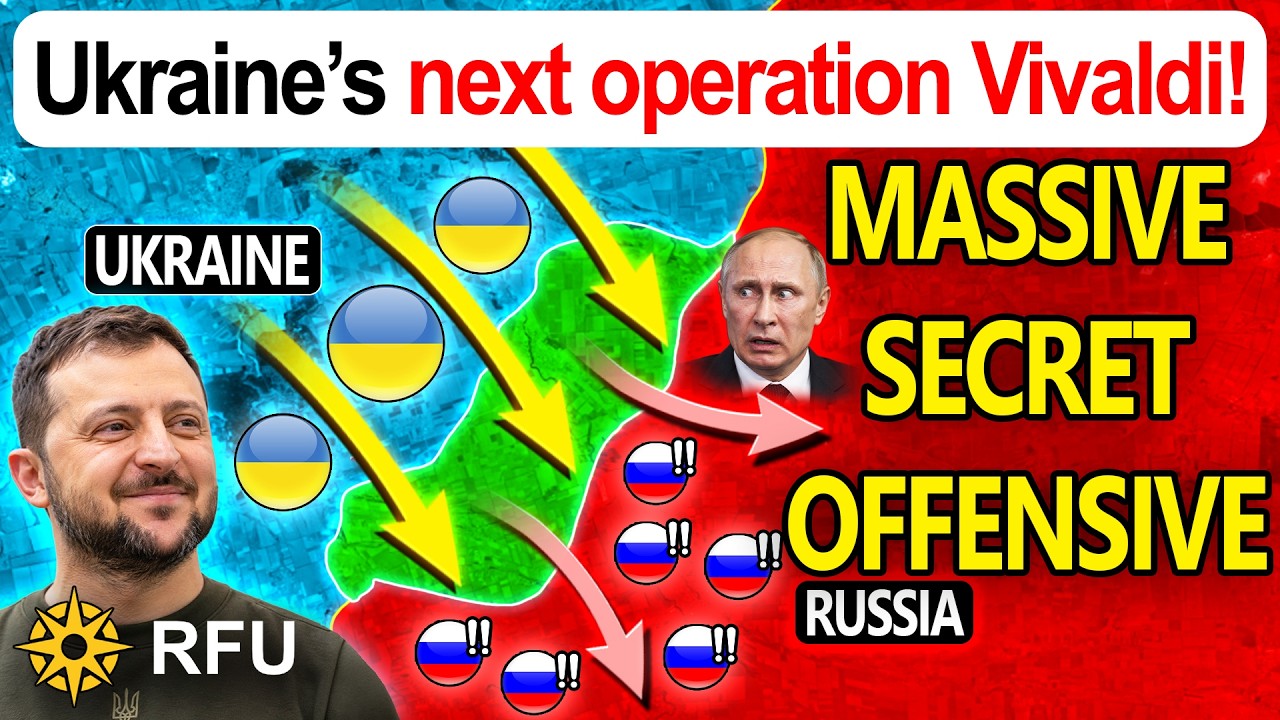
The consequences would extend beyond logistics, as Russian drone operators, previously threatened by Ukrainian strikes against their vehicles and positions, could regain operational freedom. That would increase pressure on Ukrainian infantry, complicate counterattacks, and make positions harder to defend. This threatens the operational foundation of campaigns such as Vivaldi, where months of Ukrainian strikes against Russian rear-area logistics helped prepare successful ground advances.
Long-range operations face a different challenge. Drones requiring continuous communications benefit from live course corrections, updated targeting information, and the ability to respond to changing conditions, while losing those capabilities makes missions less adaptable and less effective.
However, Ukraine’s strikes deep inside Russia generally use alternative communications and navigation systems because Starshield is geographically restricted. Consequently, the immediate disruption primarily threatens mid-range operations and air defense rather than stopping Ukraine’s strategic strikes.
The defensive consequences are particularly alarming, as Ukraine increasingly relies on interceptor drones to destroy incoming Russian Shaheds before they reach cities and energy infrastructure. These systems require rapid coordination, targeting updates, and reliable communication while pursuing fast-moving targets, and if satellite connectivity disappears during acceleration, interception opportunities shrink dramatically. More Russian drones could penetrate Ukrainian defenses, forcing missile batteries, electronic-warfare systems, and conventional weapons to compensate, which would result in additional pressure on the already stretched Ukrainian defenses and potentially more civilian casualties.
At the same time, responsibility for the cutoff remains disputed, as Elon Musk declared that Starshield operates under American government control, with restrictions ultimately determined by the US military and the president. The White House denied ordering the limitations, while American officials reportedly suggested a technical malfunction, with all sides shifting the blame. Polish Foreign Minister Radosław Sikorski publicly challenged Musk over the treatment of his European customers, reminding him that Poland helps finance Ukraine’s satellite connectivity. As a result, some service was restored, with Ukrainian officials reporting improved connectivity up to one-hundred-and-sixty kilometers per hour.

🔴 Our interactive news map: https://www.rfunews.com/map
🔴 Subscribe to unlock full access to the map + exclusive strategic insights: https://www.rfunews.com/pricing
In Kursk, a series of devastating Ukrainian strikes has just inflicted new heavy losses on the Chechen Akhmat special forces. As a result, dissatisfaction started growing among the Chechen fighters, with some seeking to abandon the Russian army altogether and switch sides.
As you remember from a previous report, the Ukrainian military intelligence conducted one of its most successful operations against the Akhmat units by infiltrating the formation and managing to place a listening device that exposed their plans, so the Ukrainian forces systematically targeted the Chechen formation.
While Russian security services have likely discovered the bug after suffering those losses, the consequences of the intelligence breach continued to haunt the Chechen unit. Even this didn’t force the Russian command to change location, which allowed Ukrainian forces to remain remarkably effective at targeting Akhmat positions with precision strikes.
One of the most devastating examples occurred in Snizhne, in the Russian-controlled Donetsk region, as Ukrainian FP-Two long-range strike drones targeted a training facility for drone operators and cadets, used by the Seventy-eight Akhmat Special Forces Regiment. The Ukrainian forces launched a coordinated attack involving eleven strike drones, each carrying warheads weighing one hundred kilograms, launching them in successive waves. The main target, a large two-story compound spanning nearly two thousand five hundred square meters, suffered catastrophic damage when ammunition stockpiles stored in the basement detonated during the attack, significantly increasing the strike's destructive effect. Approximately sixty-five Akhmat soldiers were killed, including the commander of the center that housed personnel sleeping rooms, drone assembly workshops, and facilities used for preparing warheads. Geolocated footage from multiple Ukrainian drones showed enormous secondary explosions and the complete collapse of the compound.
Soon afterward, Ukrainian reconnaissance drones easily tracked another concentration of Akhmat forces trying to relocate in Russia’s Kursk region by following them from their starting location. Footage released by Ukrainian operators shows enemy activity in a forest near the border. In a moment, Ukrainian forces launched a Himars strike against the location, with several rockets striking the area one after another. Later footage recorded by surviving Chechen soldiers showed the aftermath of the strike, revealing a large area littered with casualties and destroyed equipment. Around sixty Chechen special forces were killed, while many more were wounded.
Combined with the earlier strike in Snizhne and losses from previous operations, Akhmat units suffered roughly two hundred fatalities within a relatively short period. The significance of these losses extends beyond simple numbers, as repeated strikes against staging areas, training grounds, and concentration sites have reportedly caused growing frustration among Chechen fighters, many of whom believe their commanders have repeatedly exposed them to danger while failing to provide adequate protection.
This frustration became visible during a recent Ukrainian search-and-destroy operation, when a Ukrainian patrol encountered three Akhmat soldiers who voluntarily approached Ukrainian positions. After securing them, Ukrainian forces reportedly learned that the men were not simply seeking to surrender. Instead, they expressed a desire to join the ranks of Chechen volunteers already fighting alongside Ukraine, within formations such as the Sheikh Mansur Battalion. The captured soldiers expressed anger toward pro-Russian Chechen commanders and blamed them for the deaths of many of their compatriots. Rather than continuing to fight for Russia, they wished to switch sides and participate in operations against Russian forces.
Overall, many Chechens fight not only for military or financial reasons, but also because of deeply rooted questions of identity, nationalism, religion, and historical memory. The legacy of the Chechen wars remains powerful for many families, and resentment toward Moscow has never fully disappeared. As losses continue to mount and confidence in pro-Russian leadership weakens, some fighters appear increasingly willing to reconsider where their loyalties lie. If Russia's broader position continues to deteriorate, such tensions could become even more significant, particularly in regions that maintained strong independence movements after the collapse of the Soviet Union and where old grievances remain very much alive.

🔴 YOU ARE MISSING HALF OF OUR VIDEOS! Subscribe to unlock all our reports and support our work: https://www.youtube.com/channe....l/UCcNB1tZYpeDetqCad
Today, there is important news from Ukraine.
Here, as Starlink internet access remains cut off, Ukraine is demonstrating that it has enough capabilities so that it is not out of the fight just yet. As the cutoff has severely disrupted high-speed drone controls, Ukraine’s domestically developed missiles just delivered the most devastating strike against Russian airbases this year.
In the middle of the night, Russian observers reported a large number of high-speed missiles flying into Russian territory, as air raid warnings were declared across numerous regions. The target, Russia’s major Borisoglebsk military airbase in the Voronezh region, housing the largest component of Russia’s military aircraft launching frontline glide-bomb strikes against Ukraine. Footage shows major fires lighting up the clouds in the night sky. Local residents filmed major flashes of light followed by loud explosions coming from the direction of the airfield. Finally, footage was published showing one of the impacts itself, with a massive fireball climbing up into the sky, suggesting that a major munitions depot was hit among the strikes.
In the aftermath, satellite footage was released showing that the damage was far more extreme. Six Russian Su thirty-four fighter-bombers had been destroyed in the blasts. Four wrecks are visible lining the tarmac, while who more fire marks on the asphalt suggest that two more were caught in the blast and were severely damaged. These aircraft are key in launching Russian glide bomb strikes against Ukrainian frontline positions. They are able to carry the most out of all Russia aircraft simultaneously, and are therefore used most extensively as well. As Ukrainians are unable to counter Russian glide bombs without further-reaching missiles, the only way for Ukraine to disrupt the strikes is by targeting the aircraft and the bombs while on the ground. And the destruction of six of these aircraft is a significant loss for Russian air-support capabilities.
For the strike, Ukrainians used their own domestically produced Neptune missile systems. Ukraine has long used the missiles that sunk the Russian Black Sea flagship the Moskva in ground-attack roles as well, proving itself an effective weapon against the highest Russian targets. Just like these missiles, the Starlink cutoff recently imposed on Ukraine does not completely dismantle Ukraine’s long-range strike capabilities. The missiles used for these strikes are either guided through a ballistic trajectory, have inertial guidance systems, or use radar-homing to lock on to their targets, not relying on any Starlink connection. Ukraine’s long-range drones similarly rely on a multitude of AI systems, pre-programmed flight paths, varied satellite constellations, and sometimes even high-altitude balloon relays for guidance instead of Starlink. It’s also important to understand that long-range strikes are mostly conducted against static targets, meaning that the drones or missiles do not need to be piloted by Ukrainian operators using Starlink to fly to their targets, unlike most mid-range strike drones and interceptor drones. This is where the disruption has the most effect. Not against Ukrainian strikes against Russian oil and energy infrastructure, but in protecting civilians against Russian Shahed terror attacks and in undermining Russian offensives by the mid-range strikes. Because long-range strikes are now the only thing Ukraine has left to pressure Russia, Zelensky has officially lifted the ban on refinery strikes, which was initially imposed to precisely to approach Trump’s dealmaking efforts.
Overall, while Ukraine had halted strikes on Russian energy facilities for three days at Washington’s request, Russia continued striking Ukraine’s energy infrastructure and cities, prompting Zelensky to state that enough is enough and cancel the order. With Starlink speed limitations only affecting Ukraine’s ability to defend itself, the long-range strikes will continue with renewed determination. Ukraine has plenty of domestic systems that will continue to strike Russia’s airfields, ammunition depots, and refineries deep inside Russian territory independent of Washington’s imposed limitations on Starlink. Zelensky added that for Ukraine, this is not a game, deal, or politics, but rather the continued survival of their country and its citizens.

🔴 YOU ARE MISSING HALF OF OUR VIDEOS! Subscribe to unlock all our reports and support our work: https://www.youtube.com/channe....l/UCcNB1tZYpeDetqCad
Today, there is important news from the Zaporizhia direction.
Here, Russian forces attempted to exploit the marshlands of the former Kakhovka Reservoir to stage a surprise advance toward Zaporizhzhia. However, the Ukrainian special forces turned the Russian infiltration operation into a Vietnam-style ambush that the Russians wouldn’t forget soon.
Despite the reality on the ground, the Russian Chief of the General Staff, Valery Gerasimov, announced that Russian troops had captured Malokaterynivka and were only five kilometers from Zaporizhzhia, while Vladimir Putin publicly repeated the claim, presenting it as another major Russian success.
The Russian operation unfolded across the former bed of the Kakhovka Reservoir, emptied after the destruction of the dam in two-thousand-twenty-three by the Russian army. Since then, dense vegetation has spread across the exposed terrain, creating an extraordinary landscape of young forests, marshes, and narrow waterways as the Dnipro River returns toward its original course, with the freed-up land giving fruitful ground for new plants to grow.
The environment, resembling a tropical jungle more than the conventional Ukrainian battlefield, offered Russian infiltration groups an opportunity. Dense foliage obstructs aerial reconnaissance, limits drone visibility, and allows small groups to move beneath the trees without immediately revealing their positions. Russian commanders hoped to exploit these conditions to reach Ukrainian-held territory, record another symbolic flag-planting video so their higher command could claim advancing toward Zaporizhzhia.
However, the Ukrainian military intelligence anticipated the danger and released footage showing soldiers from its Timur Special Forces Unit conducting counter-sabotage operations inside the vegetation. The Ukrainian soldiers wore specialized ghillie suits, allowing them to blend into the surrounding trees and undergrowth. The denseness of the vegetation proved as negative to the Russians as the positive they hoped to exploit, because it made it extremely difficult to traverse, making their infiltration routes extremely limited. And that is where Ukrainians set up their ambushes, establishing concealed positions and waiting for Russian infiltrators to fall into the trap.
The first Russian soldier encountered refused an opportunity to surrender and was killed. Another immediately dropped his weapon and lay on the ground, becoming a prisoner. When additional Russians ignored Ukrainian calls to surrender, the Ukrainian group requested thermal-imaging drone support. The drone helped identify concealed soldiers beneath the vegetation, while aerial explosives forced them from their hiding places.
Ukrainian troops subsequently discovered the eliminated infiltrators and continued clearing the area. Soon, another Russian group appeared, triggering a close-range firefight among the dense trees. One Russian soldier was killed, while another was captured.
The Russians themselves wore camouflage clothing intended to conceal their movements, but their equipment proved insufficient against the coordinated Ukrainian reconnaissance and ambush. A Ukrainian heavy octocopter was then brought in against another infiltration group. Its attacks killed two Russian soldiers, while the remaining fighter surrendered; Ukrainian troops provided him first aid, bandaged his wounds, and took him prisoner.
The entire engagement demonstrated how difficult fighting inside these marshlands has become, as visibility is restricted, engagements occur at extremely short distances, and conventional aerial surveillance must be combined with concealed infantry and thermal reconnaissance. Yet despite these unsuccessful infiltration attempts, Gerasimov publicly declared that Russia was on the outskirts of Zaporhizhia city.
Ukraine responded by exposing the contradiction, as Maksym Kravchuk, spokesperson for Ukraine’s Southern Group of Forces, rejected Gerasimov’s announcement and confirmed that Malokaterynivka remained under Ukrainian control. Soldiers from Ukraine’s one-hundred-twenty-eight Heavy Mechanized Brigade then recorded footage directly inside the settlement, publicly demonstrating their continued presence. Kravchuk also explained that Russian positions were approximately twenty-five kilometers from Zaporizhzhia’s southern outskirts, not five, and ridiculed the Russian command’s claims as another collection of fairy tales presented to Putin rather than an accurate description of the battlefield.
Overall, the result was particularly embarrassing because Russian forces had attempted to exploit one of the region’s most unusual environments, where thick vegetation offered opportunities for concealed movement.
🔴 YOU ARE MISSING HALF OF OUR VIDEOS! Subscribe to unlock all our reports and support our work: https://www.youtube.com/channe....l/UCcNB1tZYpeDetqCad
Today, the biggest news is coming from the Dnipropetrovsk direction.
Here, the secret Ukrainian counteroffensive has been underway and making rapid gains in the southeast. With Russians desperately trying to keep Ukrainian successes quiet, a complete informational blackout is in place from both sides, with only the slightest hints at the true scale of the situation on the frontline.
Most notably, three significant Ukrainian advances have been confirmed in this sector. The first, Ukrainians have fully cleared the grey zone after Russians reinfiltrated following past Ukrainian successes here. Second, Ukrainians have fully liberated the town and the approaches of Shevchenko, securing Ukrainian gains made earlier this year in the now-rear. Lastly and most significantly, Ukrainians have pushed back Russian lines in the center, and made a breakthrough into the Russian staging ground of Komar itself. Crossing the Mokri Yaly River, Ukrainians now have a foothold across it within a built up settlement. Komar is the largest town along this river, and in turn has served as an important Russian staging ground for their past offensives toward the Vovcha River earlier this year. The other towns are too small and have too little intact for Russians to stage any meaningful forces and logistics there. Ukrainians managing to break into this town has therefore cut a major advantage out from under the Russian force grouping in the area.
What this now means is that supplies and reinforcements have to be stored and transported all the way from Velika Novosilka to the Russian frontline. This trip spans seventeen kilometers or ten miles along a route well within Ukrainian drones’ operating range. Ukrainians in turn experience much easier logistics here. The Ukrainian river crossings to the west are surrounded by forests that provide cover, both for storage and transport across the water. Additionally, while Russians trying to avoid the main roads are forced through open fields, the fields on the Ukrainian side are covered with tree farms. This means much more hardened roads able to bare the weight of heavy equipment, along with a huge amount of concealment to store supplies and soldiers extremely close to the frontline.
Looking back at the situation on the ground, there is no clear information on the state of the ongoing battles for Komar. However, Russian high command has recently found it necessary to release footage of several flag planting videos within the southern part of the town alone. As Russian commanders mainly rely on these flag planting videos as damage control in the media space, it is good to say that the situation for Russian forces in Komar is less than ideal. In turn, Ukrainians have released footage showing a massive series of airstrikes hitting Russian force concentrations and logistics depots in the town of Velyka Novosilka. As these GBU thirty-nine glide bombs are GPS guided, and all six of them seem to have it large intact buildings directly, it is highly likely that Ukrainians are conducting full air strike barrages on Russian strongpoints in the town.
Overall, Ukrainians have made a significantly important step in the process of pushing Russians back in the southeastern sector at Komar. Crossing the River into the town itself puts Russian logistics under immense pressure through deep Ukrainian fire control and extremely disadvantageous terrain. These disadvantages are becoming worse as autumn rains arrive on the front, further restricting Russian maneuverability. If Ukrainians manage to keep up their pressure, Russians lines will continue to be pushed further back, and reduces any Russian hope of regaining a presence in the Dnipropetrovsk region to zero.

🔴 YOU ARE MISSING HALF OF OUR VIDEOS! Subscribe to unlock all our reports and support our work: https://www.youtube.com/channe....l/UCcNB1tZYpeDetqCad
Today, the biggest news comes from Bulgaria.
Here, a major sabotage attack has destroyed most of the Starlink infrastructure at a secret facility near Sofia, after two masked individuals deliberately set fire to eleven of the seventeen antennas installed at the site. The attack immediately raised alarm because these antennas were connected to the Starlink satellite network and provided communications that are also used by Ukraine during the war, meaning an act of arson directly damaged infrastructure supporting Ukrainian connectivity far beyond its own borders. Bulgarian member of parliament Ivaylo Mirchev revealed the incident publicly and accused the authorities of remaining silent, while questioning how two attackers were able to reach a secured communications facility and destroy nearly two thirds of its antennas without being stopped. He also criticized Bulgaria’s security services for failing to prevent what he described as suspected Russian sabotage. Bulgaria’s security chief later explained that part of the station’s fencing had been removed during expansion work, making it easier for the attackers to reach the antennas.
Ukraine depends on Starlink because the system allows military units to maintain communications even when conventional networks are unavailable near the front. More than fifty thousand Starlink terminals have been delivered to Ukraine since the beginning of the full scale invasion, supporting the military alongside hospitals, emergency services, schools, energy facilities, local authorities, and businesses during blackouts and communications outages. On the battlefield, terminals connect directly with satellites overhead, allowing soldiers to transmit battlefield information, coordinate movements, relay reconnaissance from drones, and keep commanders connected with units across large distances. Starlink is also resistant to many forms of Russian electronic jamming, which made satellite connections especially valuable for controlling drones where ordinary radio links become unreliable. The antennas near Sofia support this system from the ground by exchanging data with Starlink satellites and routing that traffic into local internet networks, helping complete the connection between users in Ukraine and the wider communications network behind the constellation.
The significance of the attack grew further when, shortly afterward, Ukrainian forces reported serious disruptions to the military version of Starlink called Starshield. Ukrainian attack and air defense drones using the system suddenly began losing their connections once they exceeded roughly one hundred sixty kilometers per hour, disrupting missions without any advance warning to the units operating them. Ukrainian troops then recorded interruptions lasting between ten and twenty seconds during flight, making drones difficult to control and forcing several missions to be cancelled. At the same time, Ukraine went two consecutive nights without receiving the usual warning from its partners about Russian ballistic missile attacks on Kyiv. These warnings depend partly on the American Space Based Infrared System, whose satellites detect the intense heat produced when ballistic missiles launch, and Europe currently has no equivalent system capable of immediately replacing it. The connection to Washington became even more direct when Elon Musk stated that limits on Starshield speed or usage are decided by the United States military and ultimately by the president. As Trump pressures Ukraine over its long range operations, Ukrainian forces are now facing restrictions on drone communications, gaps in missile warning data, and the destruction of Starlink infrastructure supporting the network from Bulgaria all at once.
Overall, the attack in Bulgaria exposes Europe’s dependence on infrastructure it cannot readily replace, because the systems keeping Ukraine connected now extend across allied territory while no European network can match Starlink at the same scale. That dependence means protecting Ukraine’s communications increasingly requires protecting ground infrastructure inside Europe itself, from satellite terminals and relay sites to the power systems that keep them running. It also gives Washington enormous influence over Ukrainian operations, because restrictions on American controlled satellite links and missile warning data can immediately affect what Ukrainian forces are able to see, coordinate, and strike. Europe is therefore being pushed toward building its own resilient communications and early warning architecture, since every delay leaves another part of Ukraine’s military network dependent on systems that either Russia can attack or the United States can restrict.

🔴 YOU ARE MISSING HALF OF OUR VIDEOS! Subscribe to unlock all our reports and support our work: https://www.youtube.com/channe....l/UCcNB1tZYpeDetqCad
Today, there are important updates from the Dobropillia direction.
Here, Russian forces attempting to break through toward Dobropillia are walking into an increasingly devastating Ukrainian kill zone, where even the smallest available shelter has become a deadly trap. Despite months of fighting, Russian troops have failed to establish secure control over Bilytske, forcing commanders to continue sending reinforcements through Rodynske and across exposed approaches.
The Russian goal remains unchanged to push north and west, reach Dobropillia, and establish another foothold from which to expand their offensive beyond Pokrovsk. To accomplish this, Russian assault groups are advancing along two narrow routes extending from Rodynske. These approaches offer limited concealment through vegetation and terrain features, but much of the surrounding landscape consists of exposed fields, and that is precisely where Ukrainian drone operators have established their ambushes.
Ukrainian reconnaissance drones continuously monitor Russian movement, while FPV operators wait for soldiers to emerge from cover. Small infiltration groups attempting to cross the open ground become vulnerable long before they reach the frontline, with the resulting casualties being enormous. During September alone, Ukraine’s Lubart Brigade, operating within the Azov Corps, reported killing three-hundred-and-sixty-one Russian soldiers and wounding another two-hundred-twenty-nine along these approaches near Rodynske.
But one location illustrates the brutality of the fighting, as Russian soldiers wounded during these attacks frequently receive no assistance or evacuation. Those capable of moving desperately search for shelter, yet the surrounding fields provide almost nowhere to hide.
One of the few available structures is a narrow funnel beneath a railway embankment, and the Russians try reaching it, hoping the concrete structure will protect them. Instead, Ukrainian operators recognized the predictable movement pattern and began monitoring the passage itself, with FPV drones positioned to intercept Russians approaching the shelter, turning what appeared to be a refuge into another deadly ambush.
Repeated Russian attempts to use the same route have reportedly left dozens of bodies around the railway crossing, with Ukrainian footage showing casualties scattered along the approaches, marking the path of successive infiltration groups, leading to the railway passage being turned into a death funnel. Yet Russian commanders continue sending additional soldiers through the surrounding fields and into it, because alternative approaches offer even little protection.
This reflects the broader failure of Russia’s offensive north of Pokrovsk, because since capturing the city in February, Russian forces have attempted to exploit this by advancing toward Dobropillia. However, Ukrainian drone defenses have reduced their progress to a costly struggle for individual positions, with nearly twenty thousand killed and more than ten thousand wounded Russians in the sector since the capture. Territorial progress has been considerably less impressive, with Russian military commentators describing advances measured in mere tens of meters.
However, time is becoming another enemy now, as the Russian commanders need to reach Dobropillia before autumn rains transform the surrounding fields into deep mud. Infiltration groups already struggling across exposed terrain would become slower, before the incoming winter introduces additional difficulties, including freezing temperatures, reduced vegetation, and even limited opportunities for concealment. Capturing Dobropillia would provide buildings, basements, and hardened positions where Russian troops could shelter, consolidate, and prepare further operations, but reaching those positions requires surviving the Ukrainian drone defenses first.
Overall, despite sacrificing thousands of soldiers along the approaches to Dobropillia, Russian forces remain unable to securely control even Bilytske or establish a substantial foothold on Dobropillia’s outskirts. The worsening weather therefore threatens to expose the limits of Russia’s capabilities beyond Pokrovsk: the Russian army captured the city, but its troops are still paying an extraordinary price simply trying to advance beyond it.

🔴 YOU ARE MISSING HALF OF OUR VIDEOS! Subscribe to unlock all our reports and support our work: https://www.youtube.com/channe....l/UCcNB1tZYpeDetqCad
Today, the biggest news comes from the Russian Federation.
Here, the Russian High Command’s latest briefing on the state of the war shows how detached they really are from the real situation on the ground. While Ukrainians are exploiting this detachment to the maximum militarily, it also exposes a massive problem for Ukraine and its western allies as a whole, as a delusional enemy could be more dangerous than a sane one.
During Putin’s latest briefing on the war, Russia’s top generals presented him with a completely distorted picture of what is happening on the battlefield. Chief of the General Staff Valery Gerasimov described Russian forces as advancing far beyond their actual positions, including claims of major progress around Dobropillia and an encirclement in the Kharkiv region that does not exist. Russian troops were even sent into Dobropillia to briefly raise flags and manufacture evidence supporting these supposed gains. The real problem begins inside the Kremlin, because these reports are reaching Putin as official battlefield assessments, and he appears to genuinely believe that Russia is winning.
That distorted picture is already causing serious damage to Russian forces on the ground, because commanders are being pushed to achieve objectives that their own reports claim are already within reach. Russian units keep attacking exhausted sectors, reinforcing exposed positions, and committing more manpower and equipment to advances that have already stalled. Ukraine has repeatedly exploited that pressure by striking weakened formations and launching counterattacks once Russian offensive power is drained. The clearest example is the Ukrainian counteroffensive north of Lyman, where months of costly Russian assaults exhausted the forces holding the salient and gave Ukrainian troops the opportunity to break through and regain ground. Similar Russian overcommitment across the frontline is creating further opportunities for Ukraine, as Moscow keeps spending combat power trying to make the real battlefield resemble the successes already reported to Putin.
The larger danger begins once these false reports shape Putin’s decisions about the war itself. From the Kremlin, repeated claims of Russian advances make the current strategy appear successful and convince Putin that continued pressure is bringing Ukraine closer to defeat. Russian losses stop functioning as a warning that the war is becoming too costly, because he is being told that those losses are producing steady territorial progress. That gives Putin every reason to expand the same approach through larger offensives, broader mobilization, and heavier missile and drone strikes against Ukrainian cities, while truces and ceasefires become less attractive when he believes Russian forces are already winning. The more success his generals invent on the battlefield, the stronger Putin’s incentive becomes to continue and escalate the war.
For example, the claim that Russian forces are now only five kilometers from Zaporizhia shows how these false reports can turn into real military decisions. Once Putin is told that his troops are already approaching the city, Russian commanders come under pressure to prepare Zaporizhia itself for attack, increasing glide bomb strikes and moving artillery farther forward so more systems can reach the city directly. That movement reduces Russian fire support on the front while placing valuable artillery systems and aircraft operating around the sector closer to Ukrainian reconnaissance, drones, and medium-range strikes. Ukraine gains more opportunities to destroy Russian assets as they are pushed toward the front. Yet that military advantage comes alongside a far more dangerous situation for civilians as Zaporizhia faces heavier bombardment. Putin also has little reason to abandon the offensive when the reports reaching him say Russian forces are already standing just outside the city. A fabricated advance on a briefing map produces real Russian losses, real attacks on Ukrainian civilians, and another reason for the Kremlin to continue an offensive built around progress that never happened.
Overall, the greater danger is that Russia’s command system now rewards reports of success more than accurate information, making future military decisions increasingly detached from battlefield reality. As long as commanders protect themselves by exaggerating progress, Moscow will keep committing fresh manpower and equipment to objectives that appear attainable only on paper. Ukraine gains a strategic incentive to concentrate pressure on the sectors where Russian leadership has made the largest promises, because failures there become harder to disguise and more damaging inside the Kremlin.

🔴 YOU ARE MISSING HALF OF OUR VIDEOS! Subscribe to unlock all our reports and support our work: https://www.youtube.com/channe....l/UCcNB1tZYpeDetqCad
Today, there is amazing news from Ukraine.
After the US administration put a major restriction on Ukraine’s ability to defend itself through Starlink, Ukraine’s allies turned up in massive numbers to provide as much assistance as they can. Assistance numbering in the billions of euros is now flooding into Ukraine, along with new undisclosed weapon systems that begs the question of what Europe has sent next.
The need for this aid could not be more urgent, as currently the United States administration has imposed a one-hundred-mile or one-hundred-sixty-kilometer per hour speed restriction on Starlink connections throughout Ukraine. This completely undermines Ukraine’s ability to defend itself against conventional and jet-powered Shahed drones, as Ukraine’s interceptor drones need to keep up with speeds exceeding four hundred to seven hundred kilometers an hour to intercept them. Subsequently, Ukraine has been victim to a continuous barrage of these Russian drones over the past days, resulting in air raid alerts sounding almost continuously and close to four hundred civilian casualties in only four days.
Fortunately for Ukraine, European allies have stepped up and provided Ukrainians with extremely urgent air defense aid to protect the skies against Russian strikes. Currently, the United Kingdom has sent Ukraine an unknown quantity of lightweight multirole missiles; most likely the short-ranged missiles that Ukraine uses to intercept fast-moving targets like cruise missiles and jet-powered Shaheds. Poland has also provided Ukraine with confidential assistance to protect against Russian air strikes. Donald Tusk added that he wanted to assure Ukraine and Ukrainians that they are not alone, and could count on Poland and the EU. France is similarly organizing a new massive package of air defense aid to send to Ukraine as soon as possible, but is keeping the quantity and type of systems it will send a complete secret. Additionally, France has just completed their side of the Freya European anti-ballistic missile system development, and has transferred all the promised production licenses to Ukraine, which will enter factories shortly. During Zelensky’s visit to Belgium as well, Ukraine was given a large ammunition package for the F-sixteens in service. These jet fighters have proven to be crucial in the interception of fast-moving Russian strike weapons, particularly the jet-powered Shahed drones. Additionally, Belgium will deliver more of its F-sixteen fleet to Ukraine by the end of the year, with the transfer of such systems being a more significant undertaking.
The European Union as a whole also organized its next massive tranche of aid to Ukraine, with over two-point-eight-six billion euros dedicated to the procurement of air defense systems and missiles for Ukraine. This follows another massive tranche of nearly one billion two hundred forty million euros dedicated to the domestic Ukrainian production of interceptor drones and missiles the week before. Earlier this month as well, Germany has provided Ukraine with a full Iris-T air defense battery. They have also dedicated over a billion euros worth of funding for the production of thousands of missiles for the Iris-T air defense system, as well as for the production of interceptor drones capable of downing jet-powered Shahed drones. Finally, Germany, the Netherlands, Norway, and Spain have provided additional patriot interceptor missiles, experimental anti-drone missiles capable of taking down jet-powered Shahed drones, alongside other air defense and F-sixteen ammunition packages.
Overall, Europe’s quick response in stepping up to aid Ukraine now that the situation has taken a turn for the worse is important. Much of the aid that has been sent is undisclosed, giving Russia zero ability to anticipate Ukraine’s defenses and adjust its strike strategy accordingly. Czech president Andrej Babis stated that pursuing peace does not mean accepting Russian ideas, and Trump has let them down by doing business with Putin behind their backs, so they have to do something. Europe has no equivalent to the military use of Starlink that can be deployed quickly at scale to Ukraine, also lacking early warning capabilities to ballistic and long-range strike launches. However, Europe is sending what it can and is currently scaling up what it cannot yet provide, giving a promising forecast for future support for Ukraine against the Russian invasion and terror strikes.
🔴 YOU ARE MISSING HALF OF OUR VIDEOS! Subscribe to unlock all our reports and support our work: https://www.youtube.com/channe....l/UCcNB1tZYpeDetqCad
Today, the biggest news comes from the Russian Federation.
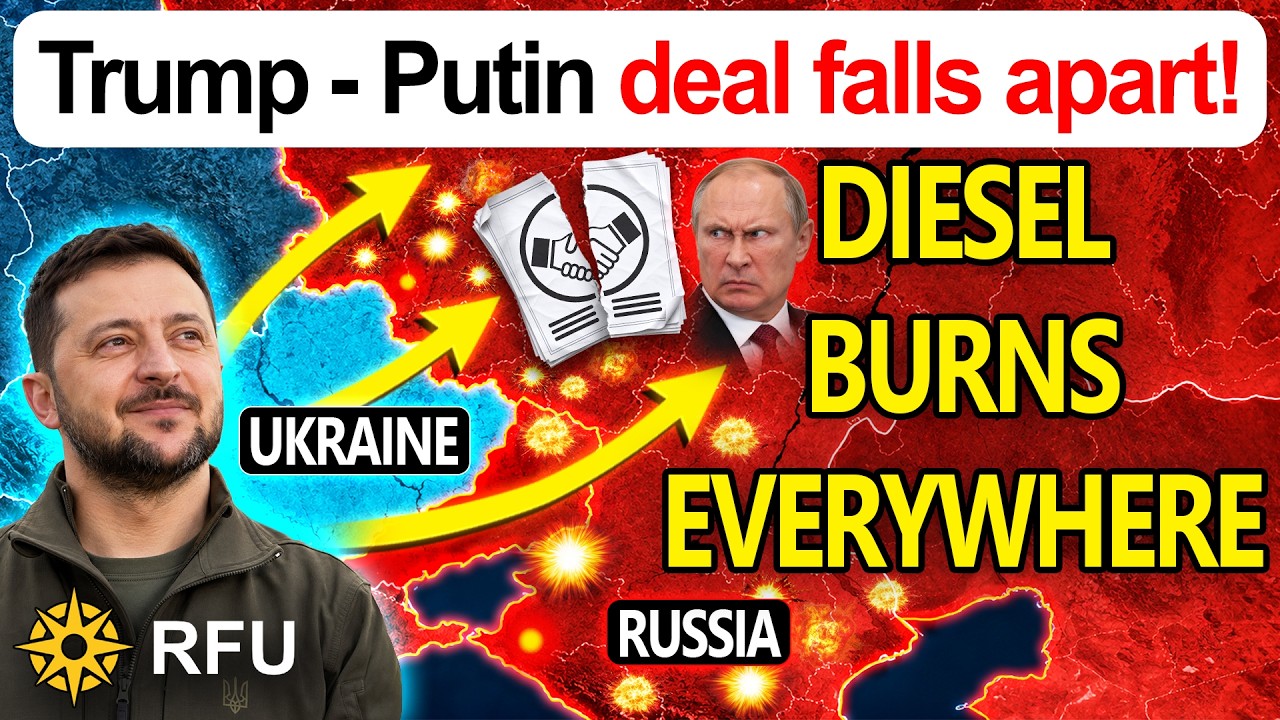
Russia openly rejected Trump’s energy ceasefire, as Russian Foreign Minister Sergey Lavrov said he does not think Zelensky deserves a ceasefire. In response, Ukraine went all in and destroyed Russia’s most important oil pumping stations and loading facilities. Ukrainian drones struck storage tanks at the oil loading terminal of Russia’s Novoshakhtinsk petroleum products plant in Rostov. The facility serves as a transshipment hub used for fuel storage and maritime export, while functioning as a critical logistical node supplying fuel to Russian forces in southern Ukraine. Ukrainian forces then struck the Samara oil pumping station, which is a major hub for receiving, storing, and blending crude delivered by pipelines from Tatarstan and Western Siberia. The facility is also supplying the Russian military, which is why Ukraine targeted it three times in several days. After this strike, Ukrainian drones set an oil depot in Belgorod Oblast ablaze, destroying it.
These strikes come after Donald Trump announced a deal with Russia, allowing it to supply diesel to the American and global markets, with the US temporarily lifting related sanctions. Russia promised more than three hundred thousand metric tons immediately, another five hundred thousand tons in November, and one million tons shortly thereafter. These volumes are modest relative to demand because the initial three hundred thousand tons equals less than one day of US consumption. Taken together, this much diesel, which will be released on three separate occasions, is only around zero point five percent of diesel consumption globally in a day, which means this amount wouldn’t influence the global price of diesel at all. More importantly, Russia could only deliver the promised amounts if its damaged refineries restart and Ukraine pauses attacks on them. Notably, Ukrainian strikes have reduced refining capacity by up to fifty percent, which forced Russia to import diesel rather than export it. What makes this deal even more critical is that Russia can earn up to seven billion dollars by selling diesel to further fuel its war against Ukraine, while global prices won’t decrease because the increase in supply is so small.
Although Ukraine opposed the deal, it initially held back from striking Russian refineries after the agreement was announced. Kyiv had been prepared to continue these attacks, but the deal between Trump and Putin offered concessions to Moscow without providing Ukraine with anything in return. Ukrainian President Volodymyr Zelensky made it clear that Kyiv was willing to agree to a mutual halt on attacks against energy infrastructure, provided that both sides respected the arrangement. However, Russia has now broken the arrangement, prompting Ukraine to resume its campaign against Russia's oil industry. The first target was Lukoil's Ukhta oil refinery, which can process approximately four point two million tonnes of crude oil annually, producing gasoline and diesel. It also supplies fuel and lubricants to Russian forces, making it an important part of the country's military supply network.
Ukraine then struck the Omsk Oil Refinery, Russia's largest refining facility, which processes more than twenty-two million tonnes of crude oil per year, accounting for roughly ten percent of the country's total refining capacity. At the same time, Ukrainian drones targeted the Gazprom Neftekhim Salavat refining and petrochemical complex. The complex can process up to ten million tonnes of hydrocarbons annually, making it a significant producer of refined petroleum products and petrochemicals.
Overall, Russia is trying to turn a temporary energy agreement into a financial lifeline, but its ability to profit depends on keeping the very infrastructure Ukraine is systematically targeting operational. By striking pumping stations, storage facilities, and refineries, Ukraine is attacking not just Russia’s oil revenue, but also its ability to move fuel to the front lines and deliver on promises to international buyers. This creates a dilemma for Moscow because if it cannot fulfill its agreement with the US, Russia will miss out on earning billions of dollars, which it desperately needs.

عناوین مهم خبری:
ترامپ: بهزودی تصمیم میگیرم حکومت ایران را نابود کنم یا نه
ترامپ: جمهوری اسلامی در آستانه فروپاشی قرار دارد
آمریکا با سفر پزشکیان و هیئت محدود جمهوری اسلامی به نیویورک موافقت کرد
ترامپ: جمهوری اسلامی از نظر مالی و نظامی شکست خورده و خواهان توافق است
آمریکا خرید کالاهای لوکس را برای مقامهای جمهوری اسلامی در نیویورک ممنوع کرد
کره جنوبی اعزام نیروی نظامی برای جنگ در خاورمیانه را رد کرد
سپاه مدعی حمله به یک نفتکش دیگر در تنگه هرمز شد
درگیری خونین شبانه در زاهدان؛ تیراندازی دو ساعت ادامه داشت
رژه مسلحانه سپاه در تهران؛ نمایش تابوتهای ترامپ و نتانیاهو
آمریکا بیتبانک بابک زنجانی را بهدلیل انتقال پول به سپاه تحریم کرد
سازمان ملل: جنگ ایران در یک ماه ۱۵۰ میلیارد دلار به کشورهای عربی زیان زد
جایزه ۱۵ میلیون دلاری آمریکا برای افشای شبکههای مالی و رمزارزی سپاه
رویترز: پرونده ایران محور چانهزنی ترامپ و شی جینپینگ میشود
ارتش اسرائیل: ۲۹ عضو حماس و جهاد اسلامی را در غزه کشتیم
مکرون: گروه هفت برای مقابله با بحران انرژی ناشی از جنگ ایران تشکیل جلسه میدهد
آمادهباش ائتلاف دریایی ۴۱ کشور برای آغاز عملیات در آبراههای منطقه
ترکیه پروازهای ماهان را از ترس تحریمهای آمریکا متوقف میکند
خلاصه:
دونالد ترامپ میگوید به لحظه تصمیمگیری درباره ازسرگیری حملات گسترده علیه جمهوری اسلامی نزدیک شده است. او در گفتوگو با اکسیوس گفت بهزودی باید تصمیم بگیرد که آیا وارد عمل شود و حکومت ایران را «نابود کند یا نه». ترامپ قرار است در حاشیه مجمع عمومی سازمان ملل با رهبران شش کشور عربی حاشیه خلیج فارس دیدار کند و نظر آنها را درباره ادامه جنگ، تشدید عملیات نظامی یا آغاز یک مسیر تازه دیپلماتیک بشنود.
رئیسجمهوری آمریکا همزمان جمهوری اسلامی را در وضعیت فروپاشی توصیف کرد و مدعی شد حکومت ایران از نظر اقتصادی و نظامی بهشدت تضعیف شده است. او در گفتوگویی دیگر گفت تهران خواهان توافق با واشینگتن است، اما آمریکا تنها توافقی را خواهد پذیرفت که شرایط موردنظرش را تامین کند. ترامپ همچنین از کنترل آمریکا بر تنگه هرمز و ادامه محاصره دریایی ایران سخن گفت.
با وجود این تهدیدها، آمریکا به مسعود پزشکیان و یک هیئت محدود ایرانی اجازه داده است برای شرکت در مجمع عمومی سازمان ملل به نیویورک سفر کنند. اعضای این هیئت با محدودیت تردد روبهرو خواهند بود و اجازه خرید کالاهای لوکس را ندارند. تامی پیگوت، سخنگوی وزارت خارجه آمریکا، گفت مقامهای جمهوری اسلامی نباید در شرایطی که مردم ایران با تورم، کمبود آب و برق و فشار اقتصادی روبهرو هستند، با پول مردم در نیویورک خرید تجملاتی کنند.
در تنگه هرمز، سپاه پاسداران مدعی حمله به یک نفتکش دیگر با پرچم توگو شده است. سازمان عملیات تجارت دریایی بریتانیا نیز وقوع یک حادثه امنیتی در نزدیکی خصب عمان را تایید کرده، اما هنوز مشخص نیست این گزارشها به یک شناور واحد مربوط هستند یا نه. همزمان کره جنوبی اعلام کرد نیروی نظامی برای مشارکت در جنگ به خاورمیانه اعزام نمیکند، هرچند ممکن است برای حفاظت از کشتیهای تجاری و انتقال نفت نقش بیشتری بر عهده بگیرد.
وزارت دفاع عربستان نیز از ورود ائتلاف دریایی چندملیتی به مرحله آمادگی عملیاتی خبر داده است. در نشست جده، نمایندگانی از ۴۱ کشور درباره استقرار نیروها، تشکیل فرماندهی مشترک و حفاظت از مسیرهای کشتیرانی و تنگههای دریایی گفتوگو کردند.
در تهران، سپاه گروههایی مسلح را در قالب «رزمایش جانفدایان» به خیابان آورد و تابوتهایی با تصاویر ترامپ و نتانیاهو به نمایش گذاشت. در زاهدان نیز یک درگیری مسلحانه شبانه حدود دو ساعت ادامه یافت. رسانههای حکومتی از کشتهشدن یک مامور پلیس و دو فرد مسلح خبر دادهاند، اما روایت منابع محلی درباره شمار مجروحان و چگونگی آغاز درگیری متفاوت است.
فشار اقتصادی آمریکا بر سپاه نیز شدت گرفته است. وزارت خزانهداری، بیتبانک متعلق به بابک زنجانی را به اتهام انتقال صدها میلیون دلار به سپاه و پردازش پرداختهای مرتبط با عبور کشتیها از تنگه هرمز تحریم کرد. برنامه «پاداش برای عدالت» نیز برای اطلاعاتی که به شناسایی و مختلکردن شبکههای مالی، حسابهای رمزارزی و شرکتهای پوششی سپاه کمک کند، تا سقف ۱۵ میلیون دلار جایزه تعیین کرده است.
در تحولی دیگر، سازمان ملل اعلام کرد جنگ ایران تنها در یک ماه حدود ۱۵۰ میلیارد دلار به اقتصاد کشورهای عربی زیان زده است. مکرون نیز از برگزاری نشست گروه هفت برای بررسی بحران انرژی خبر داد. در همین حال، رویترز گزارش داده پرونده ایران و روابط مالی پکن با تهران، به یکی از محورهای چانهزنی در دیدار ترامپ و شی جینپینگ تبدیل خواهد شد. ترکیه نیز در پی افزایش خطر تحریمهای آمریکا، پروازهای ماهان را متوقف میکند.
حمایت مالی شما از کانال اخبار خاموش میتونه هم انگیزه مضاعف بده و هم شرایط کار رو آسونتر کنه:
https://bit.ly/3wTR2sM
با عضویت در کانال به خانواده اخبار خاموش پیوسته و کانال را حمایت کنید:
https://www.youtube.com/channe....l/UCE0h4bxFf7xund40g

عناوین مهم خبری:
ترامپ: آماده حمله دوباره به ایران هستیم و با اختلاف زیادی در جنگ پیروز شدهایم
ترامپ: تمام تحرکات جمهوری اسلامی را زیر نظر داریم؛ حتی نمیتوانند پنهانی جابهجا شوند
ترامپ: برای ادامه جنگ ایران مهمات کافی داریم؛ ذخایر آمریکا بیش از نیاز است
بحث تغییر حکومت در ایران به دولت ترامپ بازگشت | سفیر آمریکا: جمهوری اسلامی ورشکسته است
تمدید حضور ۵۰ هزار نیروی آمریکایی در خاورمیانه تا ۲۰۲۷؛ ۱۹ ناو جنگی در منطقه میمانند
رایزنی محرمانه آمریکا و امارات درباره ایران؛ درخواست تهران از ابوظبی رد شد
اسرائیل: در صورت حمله تهران، زیرساختهای انرژی ایران را هدف قرار میدهیم
هشدار تهران درباره حمله اسرائیل به محل استقرار نیروهای سپاه در لبنان
ترامپ: انتقال نفت از تنگه هرمز احیا شد | عبور شبانه نفتکشها با حمایت آمریکا
افزایش فهرست سیاه تنگه هرمز به ۵۶ کشتی؛ نفتکشها سامانههای ردیابی را خاموش کردند
استرالیا خواستار بازگشایی تنگه هرمز شد؛ محدودیتهای جمهوری اسلامی غیرقابل قبول است
پیشنهاد کیهان برای تهدید کابلهای اینترنت خلیج فارس؛ درخواست اقدام ارتش و سپاه علیه آمریکا
ایران کشته شدن سه خلبان و شش نیروی دریایی را تایید کرد؛ آمار رسمی قربانیان به ۱۸ نفر رسید
افشای ویدیوهای جعلی حملات جمهوری اسلامی؛ تصاویر قدیمی بهجای حملات جدید منتشر شدند
علی مطهری: جمهوری اسلامی راهی جز بازگشت به تفاهمنامه با آمریکا ندارد
تایید ۱۲ سالونیم زندان و مصادره اموال صادق ساعدینیا؛ ابهام درباره تغییر متهم پرونده
خلاصه:
دونالد ترامپ اعلام کرد ایالات متحده برای انجام حمله دیگری به ایران آماده است و در صورت آغاز دوباره عملیات، این کارزار مدت زیادی ادامه نخواهد داشت. رییسجمهوری آمریکا گفت جمهوری اسلامی در حال بازسازی سامانههای راداری، موشکی و تجهیزات مینگذاری خود بود، اما آمریکا این تاسیسات را شناسایی و منهدم کرد.
ترامپ همچنین مدعی شد آمریکا کنترل بسیار محکمی بر تنگه هرمز دارد و نیروهای جمهوری اسلامی نمیتوانند هیچ اقدامی را از دید ارتش آمریکا پنهان کنند. او در سخنانی دیگر گفت ایالات متحده در جنگ با جمهوری اسلامی «با اختلاف بسیار زیادی» در حال پیروزی است و بخش عمده توان دریایی، هوایی و تسلیحاتی ایران از بین رفته است.
همزمان، والاستریت ژورنال گزارش داد بحث احتمال فروپاشی و تغییر حکومت در ایران بار دیگر در دولت ترامپ مطرح شده است. اسکات بسنت، وزیر خزانهداری آمریکا، گفته فشار اقتصادی ممکن است جمهوری اسلامی را ظرف چند هفته یا چند ماه با فروپاشی روبهرو کند. سفیر آمریکا در ناتو نیز ایران را کشوری ورشکسته توصیف کرد و گفت مردم ایران حکومت را مسئول شرایط کنونی خواهند دانست و خواستار تغییر خواهند شد.
وزیر دفاع اسرائیل نیز هشدار داد اگر جمهوری اسلامی بار دیگر به اسرائیل حمله کند، تمام زیرساختهای ملی، نظامی و غیرنظامی ایران، از جمله زیرساختهای انرژی، هدف قرار خواهند گرفت. او فشار اقتصادی، نگرانی از قیام مردم و احتمال سقوط حکومت را عواملی دانست که ممکن است جمهوری اسلامی را به اقدامات از سر استیصال سوق دهد.
در همین حال، والاستریت ژورنال خبر داد پیت هگست استقرار بخشی از نیروهای آمریکا در خاورمیانه را تا سال ۲۰۲۷ تمدید کرده است. حدود ۵۰ هزار نیروی آمریکایی، ۱۹ ناو جنگی، دو ناو هواپیمابر، ۱۳ ناوشکن، جنگندهها و یگانهای پدافند هوایی همچنان در منطقه حضور دارند.
در تحولی دیگر، اکسیوس از دیدار استیو ویتکاف با طحنون بن زاید، مشاور امنیت ملی امارات، و رایزنی آنها درباره گامهای بعدی در قبال بحران ایران خبر داد. این دیدار پس از توقف روابط تجاری و مالی امارات با جمهوری اسلامی و آغاز طرح تازه آمریکا برای افزایش فشار اقتصادی بر تهران انجام شده است.
تنگه هرمز نیز همچنان یکی از کانونهای اصلی جنگ است. رویترز گزارش داد جمهوری اسلامی تعداد کشتیهای قرارگرفته در فهرست سیاه خود را به ۵۶ فروند رسانده است. در مقابل، نفتکشها با حمایت نیروی دریایی آمریکا، عمدتا شبانه و با خاموش کردن سامانههای ردیابی از مسیر نزدیک به عمان عبور میکنند. ترامپ مدعی شده حجم انتقال نفت از تنگه هرمز تقریبا به سطح پیش از جنگ بازگشته است.
در ایران نیز وزارت بهداشت شمار کشتهشدگان حملات اخیر آمریکا را ۱۸ نفر و شمار مجروحان را ۱۴۲ نفر اعلام کرد. رسانههای داخلی کشته شدن سه خلبان و شش عضو نیروی دریایی ارتش جمهوری اسلامی را تایید کردهاند.
در این برنامه همچنین تازهترین اخبار درباره هشدار تهران به اسرائیل در ارتباط با حضور نیروهای سپاه در لبنان، پیشنهاد استفاده از کابلهای فیبر نوری خلیج فارس علیه آمریکا، حکم زندان و مصادره اموال صادق ساعدینیا و انتشار ویدیوهای جعلی از حملات جمهوری اسلامی به پایگاههای آمریکا را بررسی میکنیم.
حمایت مالی شما از کانال اخبار خاموش میتونه هم انگیزه مضاعف بده و هم شرایط کار رو آسونتر کنه:
https://bit.ly/3wTR2sM
با عضویت در کانال به خانواده اخبار خاموش پیوسته و کانال را حمایت کنید:
https://www.youtube.com/channe....l/UCE0h4bxFf7xund40g

لطفا دوستانتان را به کانال دعوت کنید
حمایت مالی از کانال میتونه از طریق لینک زیر انجام بشه:
https://bit.ly/3wTR2sM
لازم به ذکر هستش که این لینک بنا بر اصرار و لطف برخی از اعضای کانال ایجاد شده است.
با عضویت در کانال به خانواده اخبار خاموش پیوسته و کانال را حمایت کنید:
https://www.youtube.com/channe....l/UCE0h4bxFf7xund40g

عناوین مهم خبری:
جیدی ونس: آمریکا و جمهوری اسلامی به توافق نزدیک شدند، اما هنوز تضمینی وجود ندارد
آمریکا شریانهای مالی سپاه را هدف گرفت؛ موج تازه تحریمها علیه جمهوری اسلامی
اسکات بسنت: دسترسی خطوط هوایی ایران به فرودگاهها و سوخترسانی قطع میشود
دانمارک: نقش جمهوری اسلامی در تهدیدهای تروریستی اروپا پررنگتر شده است
بریتانیا فرد مرتبط با طرح هدف قرار دادن خبرنگار ایران اینترنشنال را متهم کرد
پاسخ تند مجلس به وزیر خزانهداری آمریکا؛ بر سر تنگه هرمز عقبنشینی نمیکنیم
دادستانی ایتالیا دو ایرانی را به اتهام تهدید مخالفان جمهوری اسلامی تحت تحقیق قرار داد
محسن رضایی: ادامه محاصره دریایی میتواند به اقدام نظامی منجر شود
رسانه نزدیک به سپاه: متن توافق احتمالی ایران و آمریکا هنوز نهایی نشده است
قالیباف: تهران پیش از اقدام آمریکا هیچ امتیازی نخواهد داد
هگست: جمهوری اسلامی باید توافق را بپذیرد، در غیر این صورت گزینه نظامی روی میز است
ترامپ برای تصمیم نهایی درباره ایران وارد اتاق وضعیت کاخ سفید شد
فارس: ادعاهای ترامپ درباره توافق با جمهوری اسلامی با متن تفاهم همخوانی ندارد
صداوسیما: روایت ترامپ از توافق احتمالی با ایران یکطرفه است
بقائی: تاکنون هیچ تفاهم نهایی میان جمهوری اسلامی و آمریکا حاصل نشده است
خلاصه:
در حالی که گمانهزنیها درباره نزدیک شدن جمهوری اسلامی و آمریکا به یک توافق جدید افزایش یافته، مقامهای دو طرف همچنان از وجود اختلافات مهم خبر میدهند. جیدی ونس، معاون رئیسجمهوری آمریکا، اعلام کرده مذاکرات به مراحل حساسی رسیده اما هنوز هیچ تضمینی برای دستیابی به توافق وجود ندارد. همزمان رسانههای آمریکایی از تفاهم اولیه برای تمدید آتشبس و کاهش محدودیتهای کشتیرانی در تنگه هرمز خبر دادهاند؛ توافقی که هنوز نیازمند تصمیم نهایی دونالد ترامپ است.
در همین حال واشینگتن فشار اقتصادی بر جمهوری اسلامی را تشدید کرده است. وزارت خارجه و وزارت خزانهداری آمریکا مجموعهای از تحریمهای تازه را علیه شبکههای نفتی و پتروشیمی ایران اعمال کردهاند؛ اقدامی که به گفته مقامهای آمریکایی مستقیماً منابع مالی سپاه پاسداران را هدف قرار میدهد. اسکات بسنت، وزیر خزانهداری آمریکا، نیز از برنامههایی برای محدود کردن فعالیت خطوط هوایی ایران و قطع دسترسی آنها به خدمات فرودگاهی و سوخترسانی خبر داده است.
همزمان تنشهای امنیتی پیرامون جمهوری اسلامی در اروپا نیز افزایش یافته است. سازمانهای اطلاعاتی دانمارک و سوئد نسبت به نقش فزاینده جمهوری اسلامی در تهدیدهای امنیتی و فعالیتهای مرتبط با مخالفان حکومت هشدار دادهاند. در بریتانیا نیز فردی به اتهام همکاری با شبکهای مرتبط با ایران برای هدف قرار دادن یک روزنامهنگار ایران اینترنشنال تحت پیگرد قرار گرفته است. در ایتالیا نیز دو شهروند ایرانی به ظن تهدید مخالفان جمهوری اسلامی و فعالیتهای مرتبط با اهداف تروریستی تحت تحقیق قرار دارند.
در داخل حکومت نیز پیامهای متناقضی درباره توافق احتمالی دیده میشود. رسانههای نزدیک به سپاه تأکید میکنند متن تفاهم هنوز نهایی نشده و برخی ادعاهای مطرحشده از سوی دونالد ترامپ را رد میکنند. محمدباقر قالیباف نیز اعلام کرده تهران پیش از اقدام آمریکا هیچ گام تازهای برنخواهد داشت. از سوی دیگر محسن رضایی هشدار داده در صورت ادامه فشارهای دریایی، جمهوری اسلامی گزینه اقدام نظامی را بررسی خواهد کرد.
این تحولات در شرایطی رخ میدهد که دونالد ترامپ برای بررسی تصمیم نهایی درباره ایران وارد اتاق وضعیت کاخ سفید شده و مقامهای ارشد آمریکایی تأکید میکنند که جمهوری اسلامی باید توافق پیشنهادی را بپذیرد یا با فشارهای شدیدتر اقتصادی و حتی گزینه نظامی روبهرو خواهد شد. مجموعه این رویدادها نشان میدهد پرونده ایران وارد مرحلهای حساس شده؛ مرحلهای که میتواند مسیر تنش، توافق یا رویارویی میان تهران و واشینگتن را در هفتههای آینده مشخص کند.
حمایت مالی شما از کانال اخبار خاموش میتونه هم انگیزه مضاعف بده و هم شرایط کار رو آسونتر کنه:
https://bit.ly/3wTR2sM
با عضویت در کانال به خانواده اخبار خاموش پیوسته و کانال را حمایت کنید:
https://www.youtube.com/channe....l/UCE0h4bxFf7xund40g
عناوین مهم خبری:
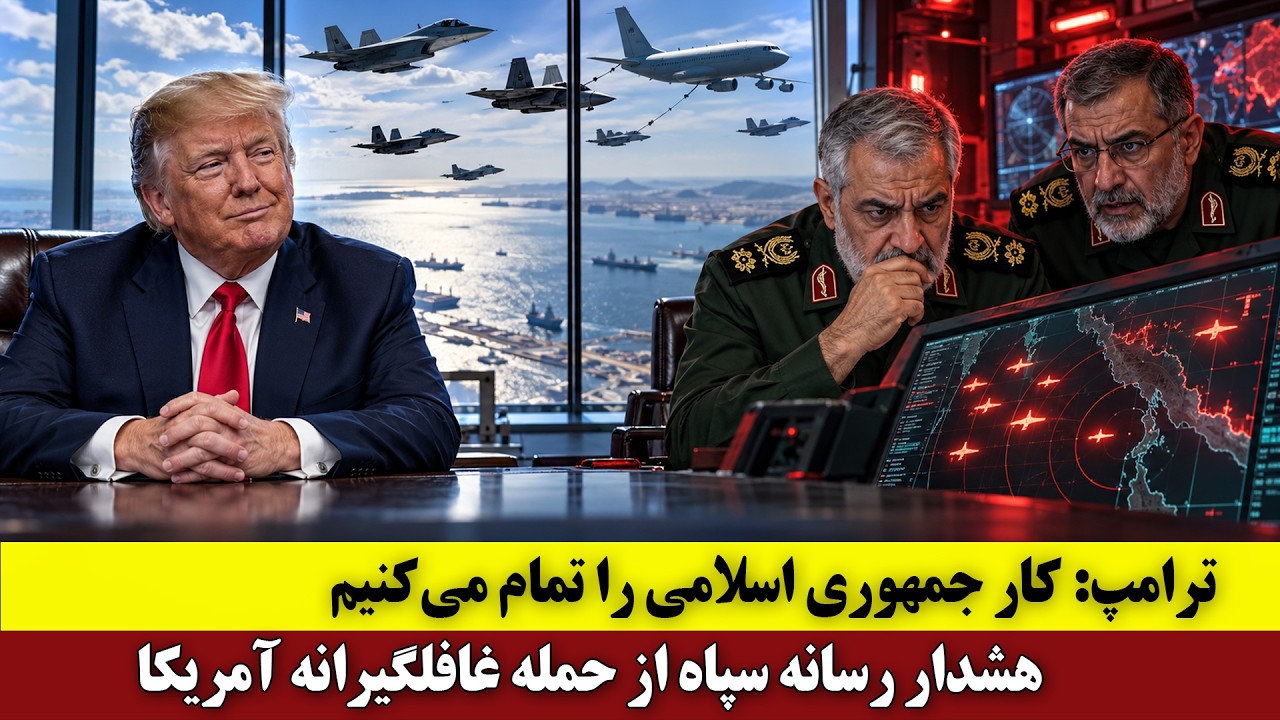
ترامپ: کار جمهوری اسلامی را به هر روشی تمام میکنیم
ونس: ایران باید غنیسازی را کاهش دهد | برادسکی: موضع آمریکا مبهم است
ذخایر تجاری نفت به زیر ۶ میلیارد بشکه رسید | هشدار مدیرعامل آرامکو
بازداشت هفتمین مظنون توطئه حمله به هواپیماهای آمریکایی در بریتانیا
استرداد هکر ایرانیـترکیهای از مونتهنگرو به آمریکا | ارتباط با سپاه پاسداران
حمله به نفتکش در تنگه هرمز با ۱۲ زخمی | کاهش کارایی کارت هرمز برای تهران
فعالیت دوباره در سایت هستهای محرمانه ایران پس از حمله اسرائیل
حسین شریعتمداری: قالیباف را رییس تیم مذاکرهکننده کردند تا مجلس را تعطیل کنند
روبیو: ایران فرصت توافق هستهای را از دست داد | تهران: از حق غنیسازی نمیگذریم
عملیات پیشدستانه ارتش جمهوری اسلامی | هشدار اسرائیل درباره خطای محاسباتی تهران
وزیر خارجه اسرائیل: ساعت نابودی اسرائیل در تهران همچنان روزشماری میکند
حمایت وزیر اسرائیلی از شاهزاده رضا پهلوی | درخواست احیای روابط ایران و اسرائیل
احضار سفیر ایران در پاریس | اعتراض فرانسه به کارزار اطلاعات جعلی جمهوری اسلامی
هشدار رسانه سپاه از حمله غافلگیرانه آمریکا | خطر تکرار تله مذاکره برای جمهوری اسلامی
خلاصه:
دونالد ترامپ میگوید آمریکا کار با جمهوری اسلامی را «به هر روشی» تمام خواهد کرد؛ همزمان جیدی ونس از تهران خواسته ظرفیت غنیسازی اورانیوم را بهطور عملی و معنادار کاهش دهد. ونس میگوید واشینگتن با مسعود پزشکیان و عباس عراقچی در تماس است، اما هنوز نمیداند این دو نفر تا چه اندازه در ساختار جمهوری اسلامی اختیار تصمیمگیری دارند. جیسون برادسکی، مدیر سیاستگذاری سازمان اتحاد علیه ایران هستهای، نیز موضع ونس را مبهم دانسته و پرسیده است آیا آمریکا همچنان توقف کامل غنیسازی را میخواهد یا به کاهش ظرفیت آن رضایت خواهد داد. در مقابل، یک مقام جمهوری اسلامی به رویترز گفته تهران هرگز از آنچه «حق غنیسازی» میخواند صرفنظر نخواهد کرد. مارکو روبیو، وزیر خارجه آمریکا، نیز تاکید کرده جمهوری اسلامی فرصت رسیدن به توافق هستهای را از دست داده است.
بازشدن کانال مذاکره میان ایران و آمریکا بار دیگر این سوال را مطرح کرده که آیا مذاکرات میتواند به توافق منجر شود یا مقدمه فشار و حملهای تازه است. پیش از حمله نهم اسفند نیز مقامهای جمهوری اسلامی تصور میکردند مذاکرات با میانجیگری عمان به نتیجه نزدیک شده و حملهای انجام نخواهد شد، اما همین ارزیابی به یکی از مرگبارترین غافلگیریهای حکومت تبدیل شد. اکنون خبرگزاری فارس، وابسته به سپاه پاسداران، هشدار داده آمریکا در چند نوبت برای حمله مجدد به ایران آماده شده و با پرواز جنگندهها، هواپیماهای سوخترسان و پهپادها در جنوب خلیج فارس، به دنبال فرسودهکردن نیروهای آمادهباش و سامانههای پدافندی جمهوری اسلامی است.
همزمان سخنگوی ارتش جمهوری اسلامی از انجام عملیاتهای پیشدستانه علیه آمریکا خبر داده و مقامهای دفاعی اسرائیل نیز درباره خطای محاسباتی تهران و احتمال شلیک موشک به سوی اسرائیل هشدار دادهاند. وزیر خارجه اسرائیل با اشاره به ساعت نصبشده در تهران برای نابودی اسرائیل گفت تهدیدهای جمهوری اسلامی همچنان ادامه دارد. گیلا گملیل، وزیر علوم و فناوری اسرائیل، نیز از مواضع شاهزاده رضا پهلوی حمایت کرده و خواستار احیای روابط ایران و اسرائیل پس از پایان جمهوری اسلامی شده است. در تحولی دیگر، تصاویر ماهوارهای از فعالیت مجدد در یک سایت هستهای محرمانه ایران پس از حمله اسرائیل خبر میدهند.
تنش در تنگه هرمز نیز ادامه دارد. حمله به نفتکش «آن پیس» هنگام عبور از این آبراه ۱۲ زخمی بر جا گذاشت، اما محمد ایرانی، دیپلمات پیشین جمهوری اسلامی، اذعان کرده که «کارت تنگه هرمز» دیگر کارایی اولیه را برای تهران ندارد. در بازار جهانی انرژی، مدیرعامل آرامکو هشدار داده کمتر از شش میلیارد بشکه نفت در ذخایر تجاری باقی مانده و سیستم تامین نفت جهان همین حالا نیز زیر فشار قرار دارد.
در بریتانیا هفتمین مظنون پرونده حمله احتمالی به پایگاه فرفورد، محل استقرار هواپیماهای آمریکایی، بازداشت شده و مقامهای آمریکایی از احتمال ارتباط این تهدید با جمهوری اسلامی سخن گفتهاند. مونتهنگرو نیز یک شهروند ایرانیـترکیهای متهم به مشارکت در کارزار هکری مرتبط با سپاه پاسداران را به آمریکا مسترد کرده است. در فرانسه نیز سفیر جمهوری اسلامی به دلیل آنچه پاریس «کارزار اطلاعات جعلی» درباره اعتراضات دانشآموزان خوانده، احضار شده است. در داخل حکومت هم حسین شریعتمداری به انتخاب محمدباقر قالیباف بهعنوان رییس هیات مذاکرهکننده حمله کرده و گفته این تصمیم عملا مجلس را تعطیل کرده است.
حمایت مالی شما از کانال اخبار خاموش میتونه هم انگیزه مضاعف بده و هم شرایط کار رو آسونتر کنه:
https://bit.ly/3wTR2sM
با عضویت در کانال به خانواده اخبار خاموش پیوسته و کانال را حمایت کنید:
https://www.youtube.com/channe....l/UCE0h4bxFf7xund40g

عناوین مهم:
افشای فایلهای محرمانه یوفو توسط ترامپ
رسوایی پنهانکاری ناسا و سازمان سیا
انتشار اسناد سری پنتاگون درباره موجودات فضایی
شهادت نظامیان و فضانوردان درباره یوفوها
تصاویر محرمانه آپولو و مشاهده اجسام ناشناس
ادعای مخفی نگه داشتن حقیقت توسط دولت آمریکا
افشاگری درباره بازیافت بشقاب پرندههای سقوطکرده
اظهارات دانشمندان درباره فناوری فرازمینی
مقاومت CIA و DIA در برابر انتشار اسناد یوفو
آغاز موج جدید افشاگری درباره حیات فرازمینی
خلاصه:
انتشار ناگهانی مجموعهای از فایلهای محرمانه یوفو توسط دولت ترامپ، موج تازهای از بحثها درباره پنهانکاری چند دههای دولت آمریکا، ناسا، سیا و پنتاگون به راه انداخته است. در این اسناد و ویدیوهای تازه منتشرشده، تصاویری از اجسام ناشناس پرنده دیده میشود که بنا بر ادعای مقامهای نظامی آمریکا، رفتارهایی فراتر از توان فناوری شناختهشده انسانی دارند؛ از تغییر مسیرهای ناگهانی با زاویه ۹۰ درجه گرفته تا سرعتهایی که به گفته کارشناسان، هر انسانی را درون آن نابود میکند. برخی تصاویر مربوط به خاورمیانه، اقیانوس آرام و حتی ماموریتهای فضایی ناسا در دهههای گذشته هستند.
در یکی از جنجالیترین بخشهای این افشاگری، مقامهای سابق نظامی و اطلاعاتی آمریکا مدعی شدهاند که دولت آمریکا دههها اسناد مربوط به «بازیافت بشقابپرندهها» و حتی موجودات غیرانسانی را مخفی کرده است. برخی شاهدان از مشاهده اجساد کوچک ناشناس در دهه ۱۹۵۰ سخن گفتهاند و فضانوردان آپولو و جمینی نیز گزارشهایی از نورها و اجسام عجیب در نزدیکی ماه ثبت کردهاند. همزمان، چهرههایی مانند دکتر میچیو کاکو، فیزیکدان مشهور، این افشاگری را «نقطه عطف تاریخی» توصیف کردهاند و میگویند برای نخستینبار حجم بزرگی از اسناد محرمانه در اختیار پژوهشگران مستقل قرار گرفته است.
در این میان، انگشت اتهام به سمت سیا و بخشهایی از جامعه اطلاعاتی آمریکا نیز نشانه رفته است. برخی مقامهای سابق و تهیهکنندگان مستندهای مرتبط ادعا میکنند بوروکراسی امنیتی آمریکا حتی روسای جمهور و اعضای کابینه را هم سالها از دسترسی کامل به این اطلاعات محروم کرده بود. به گفته آنها، مقاومت شدیدی در برابر انتشار کامل اسناد وجود دارد و هنوز تنها بخش کوچکی از فایلها منتشر شده است. همچنین ادعا شده رقابت آمریکا، روسیه و چین بر سر فناوریهای احتمالی مرتبط با این پدیدهها، یکی از دلایل اصلی پنهانکاری طولانیمدت بوده است.
همزمان این افشاگریها بار دیگر موجی از تردید عمومی نسبت به روایتهای رسمی دولت آمریکا ایجاد کرده؛ بهویژه در فضایی که بسیاری به دروغهای گذشته واشینگتن درباره پروندههایی مانند ترور کندی، کرونا و پروندههای امنیتی دیگر اشاره میکنند. اکنون حامیان انتشار این اسناد میگویند موضوع یوفوها ممکن است یکی دیگر از پروندههایی باشد که سالها تحت عنوان «تئوری توطئه» پنهان شده بود، اما بهتدریج ابعاد تازهای از آن در حال آشکار شدن است.
حمایت مالی شما از کانال اخبار خاموش میتونه هم انگیزه مضاعف بده و هم شرایط کار رو آسونتر کنه:
https://bit.ly/3wTR2sM
با عضویت در کانال به خانواده اخبار خاموش پیوسته و کانال را حمایت کنید:
https://www.youtube.com/channe....l/UCE0h4bxFf7xund40g
عناوین مهم خبری:
ادامه دیپلماسی و فشار نظامی آمریکا علیه جمهوری اسلامی | هشدار تهران درباره افزایش تنش
نشست پیمان دفاعی مکه در ریاض | بررسی حملات حوثیها با حضور ترکیه، عربستان و پاکستان
استعفای وزیر نفت پس از توقف بارگیری نفت ایران | صادرات منطقه از سطح پیش از جنگ گذشت
مقابله جمهوری اسلامی با استارلینک | احضار سفیر نروژ و توقیف ۹۹۷ دستگاه
تهدید کشورهای منطقه از سوی سپاه | سه حمله به نفتکشها در تنگه هرمز
خروج ۱۲ بمبافکن بیـ۱ آمریکا از بریتانیا | احتمال ارتباط تهدید امنیتی با جمهوری اسلامی
انفجارهای نزدیک یک نفتکش در جنوب یمن | آغاز بررسی حادثه در نزدیکی المخا
برنامه اضطراری نفت کشورهای خلیج فارس | وزیران انرژی در منامه تشکیل جلسه دادند
تمدید تحریم چهار عضو سپاه در استرالیا | عبدالرضا شهلایی در فهرست تحریمها
دولت برنامهای برای افزایش حقوقها ندارد | همتی آمریکا را عامل بحران ارز معرفی کرد
نتانیاهو: جمهوری اسلامی بهدنبال نابودی اسرائیل بود | حاتمی وعده انتقام داد
نقشه کمکخلبان فلایدبی برای حمله به بنگوریون | مسافران او را مهار کردند
انتخابات میاندورهای آمریکا | شش چالش جمهوریخواهان یک ماه مانده به انتخابات
روبیو نشست محرمانه درباره جمهوری اسلامی و یمن را تایید کرد | بررسی گامهای بعدی جنگ
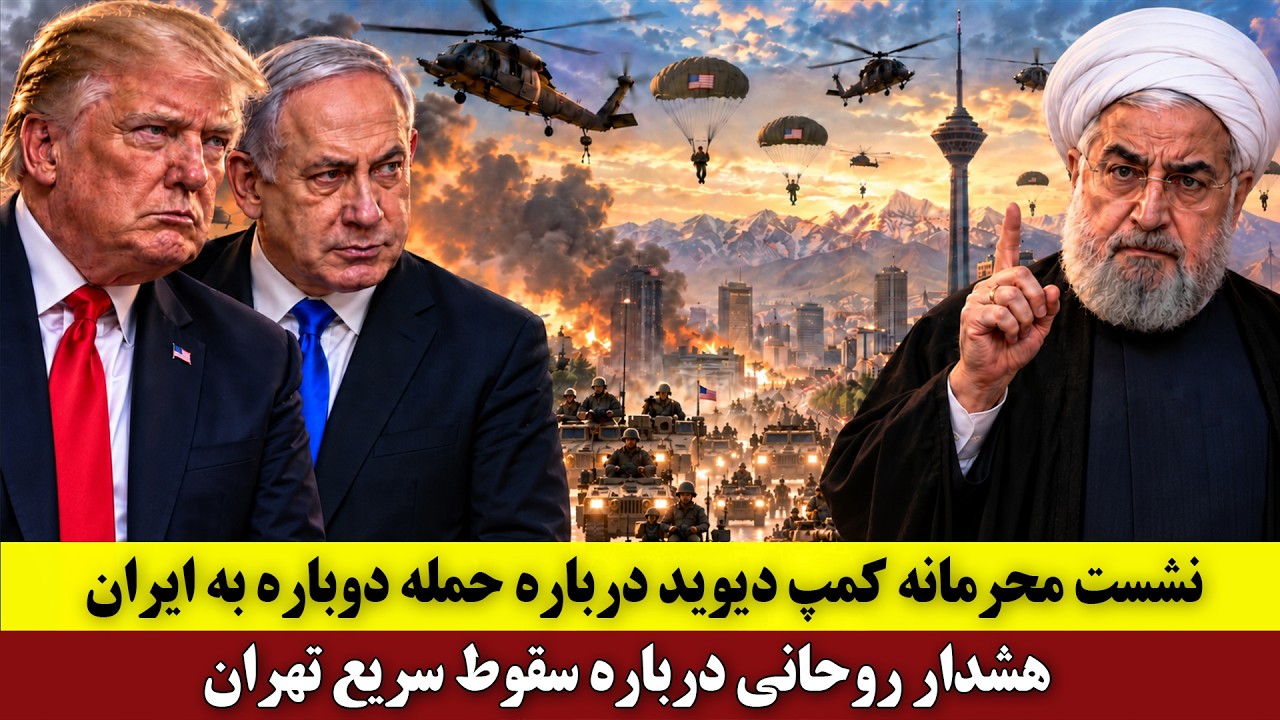
هشدار روحانی به حاکمیت | پیشبینیهای نظامی درباره جنگ ممکن است غلط باشد
خلاصه:
آمریکا میگوید مسیر دیپلماسی و فشار نظامی علیه جمهوری اسلامی بهطور همزمان ادامه دارد. کریس رایت، وزیر انرژی آمریکا، تاکید کرد هر دو گزینه همیشه دنبال میشوند. مارکو روبیو نیز برگزاری نشست محرمانه مقامهای ارشد دولت ترامپ در کمپ دیوید درباره جمهوری اسلامی و یمن را تایید کرد؛ نشستی که به گزارش اکسیوس، در آن درباره گامهای بعدی جنگ و احتمال ازسرگیری عملیات گسترده نظامی گفتوگو شده است.
همزمان عباس موسوی، معاون دفتر پزشکیان، هشدار داد شرایط به سمت افزایش تنش میرود و جمهوری اسلامی باید «آرایش جنگی» خود را تقویت کند. علی فدوی نیز کشورهای منطقه را تهدید کرد که در صورت استفاده آمریکا از خاک آنها، پایگاههایشان هدف قرار خواهد گرفت. حسن روحانی اما با یادآوری خطای محاسباتی نظامیان پیش از سقوط بغداد، به حاکمیت هشدار داد معادلات و پیشبینیهای نظامی ممکن است غلط از آب درآید و تصمیمگیری درباره جنگ نباید تنها در اختیار نظامیان باشد.
تنش در آبهای منطقه نیز ادامه دارد. سازمان عملیات تجارت دریایی بریتانیا از سه حمله به نفتکشها در تنگه هرمز و تهدید یک نفتکش از سوی سپاه خبر داد. یک نفتکش دیگر نیز چند انفجار را در نزدیکی خود در جنوب المخا مشاهده کرد. با وجود این حملات، صادرات نفت خاورمیانه در چند روز پایانی سپتامبر به روزانه ۱۹ و نیم تا ۲۲ و نیم میلیون بشکه رسید و از میانگین پیش از جنگ عبور کرد. وزیران نفت کشورهای شورای همکاری خلیج فارس نیز برای بررسی یک برنامه اضطراری انرژی در منامه تشکیل جلسه دادند.
در ایران، استعفای محسن پاکنژاد، وزیر نفت، پس از افشای توقف کامل بارگیری نفت خام پذیرفته شد و حمید بورد سرپرستی وزارت نفت را برعهده گرفت. وزیر خزانهداری آمریکا پیشتر گفته بود ایران در ماه سپتامبر حتی یک بشکه نفت خام روی نفتکشها بارگیری نکرده است. در همین حال، رییس سازمان برنامه و بودجه اعلام کرد دولت فعلا برنامهای برای افزایش حقوق کارمندان و بازنشستگان ندارد و عبدالناصر همتی، رییس کل بانک مرکزی، آمریکا و اسرائیل را مسئول فشار بر بازار ارز معرفی کرد.
جمهوری اسلامی همچنین مقابله با اینترنت ماهوارهای را تشدید کرده است. وزارت خارجه سفیر نروژ را به دلیل ادامه فعالیت استارلینک در ایران احضار کرد. پلیس امنیت اقتصادی نیز از توقیف ۹۹۷ دستگاه استارلینک و بازداشت ۱۶۳ نفر تنها در چهار ماه نخست سال خبر داده است. یکی از معاونان وزارت ارتباطات آشکارا گفته گسترش استارلینک میتواند توان حکومت برای کنترل فضای مجازی را از بین ببرد.
در تحولات منطقه، ترکیه، عربستان سعودی و پاکستان برای بررسی تحولات یمن و نهادینهسازی پیمان دفاعی مکه در ریاض جلسه برگزار میکنند. استرالیا نیز تحریمهای چهار عضو و عامل سپاه پاسداران، از جمله عبدالرضا شهلایی، را تمدید کرد. آمریکا هم ۱۲ بمبافکن بیـ۱ را یک هفته پس از بازداشت چند مظنون به جرایم مرتبط با تروریسم و مواد منفجره از پایگاه فرفورد بریتانیا خارج کرد؛ مقامهای بریتانیایی احتمال ارتباط این تهدید با جمهوری اسلامی را مطرح کردهاند.
بنیامین نتانیاهو مدعی شد جمهوری اسلامی قصد داشت با گروههای نیابتی، موشکهای بالستیک و یک انفجار هستهای اسرائیل را نابود کند. در مقابل، امیر حاتمی، فرمانده کل ارتش جمهوری اسلامی، وعده داد انتقام خون علی خامنهای گرفته خواهد شد. رسانههای اسرائیلی نیز گزارش دادند کمکخلبان عمانی یک پرواز فلایدبی قصد داشته هواپیما را به تاسیسات یا هواپیماهای مستقر در فرودگاه بنگوریون بکوبد؛ نقشهای که با مقاومت خلبان، دخالت مسافران و حضور دو خلبان خارج از شیفت ناکام ماند.
در آمریکا نیز یک ماه مانده به انتخابات میاندورهای، جمهوریخواهان برای حفظ اکثریت خود در مجلس نمایندگان و سنا با رقابتی دشوار روبهرو هستند. اقتصاد، تورم، قیمت بنزین، جنگ با جمهوری اسلامی و نگرانی درباره دموکراسی در صدر دغدغههای رایدهندگان قرار گرفته و نظرسنجیها از افزایش شانس دموکراتها برای در اختیار گرفتن مجلس نمایندگان حکایت دارد.
حمایت مالی شما از کانال اخبار خاموش میتونه هم انگیزه مضاعف بده و هم شرایط کار رو آسونتر کنه:
https://bit.ly/3wTR2sM
با عضویت در کانال به خانواده اخبار خاموش پیوسته و کانال را حمایت کنید:
https://www.youtube.com/channe....l/UCE0h4bxFf7xund40g
عناوین خبری:
روبیو: نگرانی کشورهای خلیج فارس از جمهوری اسلامی دلیل حضور نظامی آمریکا در منطقه است
فرانسه: راهحل دیپلماتیک باید همه ابعاد تهدید جمهوری اسلامی را دربر بگیرد
رویترز: فرانسه و آمریکا قطعنامه بازگشایی تنگه هرمز را تدوین میکنند
نیکزاد: از تنگه هرمز کوتاه نمیآییم
مکرون: تنگه هرمز نباید به ابزار باجگیری جمهوری اسلامی تبدیل شود
پوتین و بن سلمان خواستار عبور امن کشتیها از تنگه هرمز و بابالمندب شدند
عراقچی حفاظت از جان خود در نیویورک را به ماموران آمریکایی سپرد
عراقچی: آمریکا اقدامات خود علیه جمهوری اسلامی را تشدید کرده است
مجلس خبرگان: سخن گفتن از رفراندوم و صلح شرافتمندانه جرمی نابخشودنی است
چهار کشور منطقه خواستار پایان درگیریها و بازگشت به دیپلماسی شدند
امیر قطر: بازگشایی تنگه هرمز و بازگشت به مذاکرات راهحل بحران خلیج فارس است
مشاور مجتبی خامنهای: آمریکا از منطقه میرود، ما و کشورهای عربی میمانیم
ترامپ: فکر میکنم با ایران توافق حاصل شود
مصوبه کمیسیون امنیت ملی مجلس | توقیف شناورها و دریافت ۲۰ درصد محموله آنها
سفیر جمهوری اسلامی در روسیه: فعلا مذاکرهای میان تهران و واشینگتن در جریان نیست
ترامپ: مقامهای آمریکایی نشست سهساعته و سازندهای با هیات ایرانی داشتند
صداوسیما: عراقچی و ویتکاف در حاشیه مجمع عمومی سازمان ملل دیدار کردند
رویترز: عراق پروازهای شرکتهای هواپیمایی ایران به بغداد را تعلیق میکند
لغو پروازهای تهران به بغداد و مسقط | انتقال پروازهای بغداد به نجف در دست بررسی است
نخستین دستنوشته منتسب به مجتبی خامنهای منتشر شد
ستاد کل نیروهای مسلح: آماده ضربات شدیدتر به آمریکا و اسرائیل هستیم
جمهوری آذربایجان پرواز شرکتهای هواپیمایی ایران را متوقف میکند
مکرون: تغییر حکومت یک کشور از طریق بمباران عملی نیست
کالاس: موضوع سرکوب و افزایش اعدامها در ایران را با عراقچی مطرح کردم
ترامپ: ویتکاف و کوشنر نشست سازندهای با میانجیهای ایران داشتند
خلاصه:
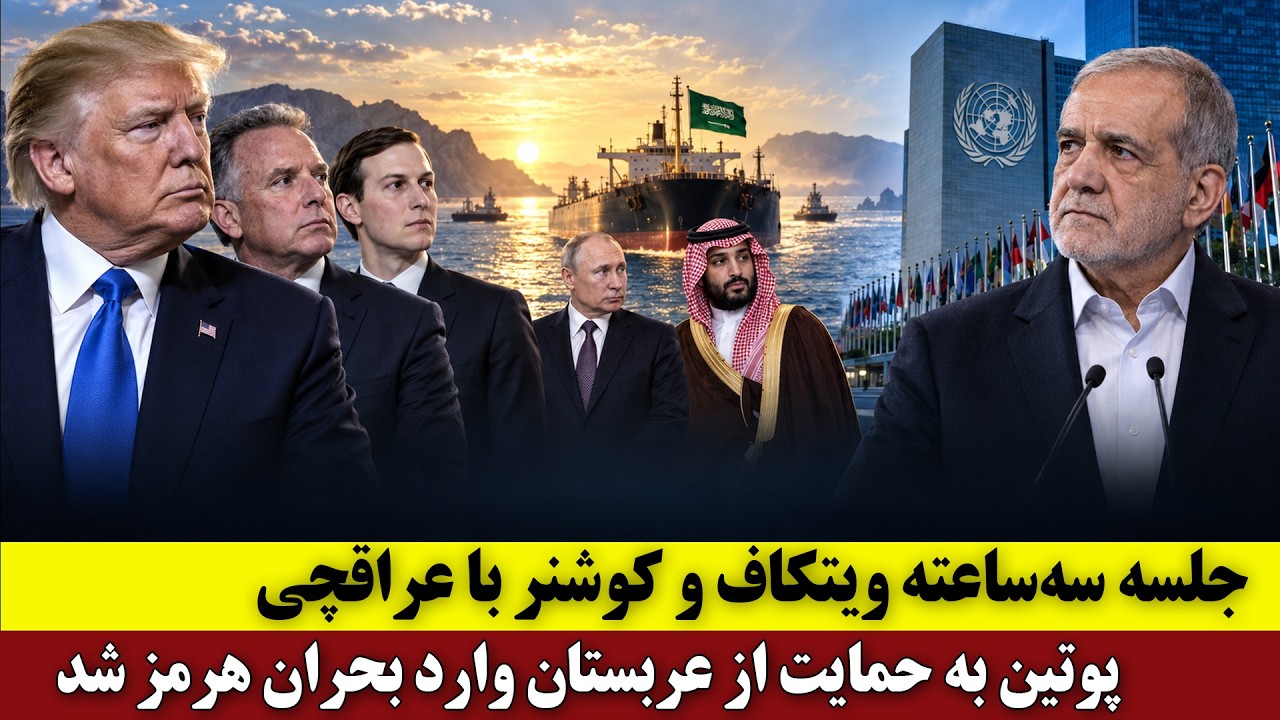
در حالی که دونالد ترامپ میگوید مقامهای آمریکایی نشستی سهساعته و «بسیار سازنده» با هیات ایرانی داشتهاند و احتمال دستیابی به توافق وجود دارد، سفیر جمهوری اسلامی در روسیه هرگونه مذاکره مستقیم میان تهران و واشینگتن را رد کرده است. صداوسیما نیز مدعی شده عباس عراقچی و استیو ویتکاف در حاشیه مجمع عمومی سازمان ملل دیدار کردهاند و عراقچی شروط تهران برای بازگشایی تنگه هرمز را به طرف آمریکایی ابلاغ کرده است. ترامپ همچنین از برگزاری نشستی سازنده میان استیو ویتکاف، جرد کوشنر و میانجیهای ایران خبر داده و گفته است شتاب زیادی برای رسیدن به توافق وجود دارد.
همزمان، بحران تنگه هرمز به یکی از محورهای اصلی رایزنیهای دیپلماتیک در نیویورک تبدیل شده است. رویترز گزارش داده فرانسه با هماهنگی آمریکا در حال تدوین پیشنویس قطعنامهای در شورای امنیت برای ایجاد یک ماموریت بینالمللی و ازسرگیری تردد کشتیها در این تنگه است. امانوئل مکرون تاکید کرده آزادی کشتیرانی نباید به ابزار باجگیری تبدیل شود. ولادیمیر پوتین و محمد بن سلمان نیز خواستار عبور امن کشتیها از تنگه هرمز و بابالمندب شدهاند. امیر قطر بازگشایی تنگه و بازگشت به مذاکرات را راهحل بحران خلیج فارس دانسته و وزیران خارجه عربستان سعودی، مصر، پاکستان و ترکیه نیز خواستار پایان درگیریها و بازگشت به دیپلماسی شدهاند.
در مقابل، مقامهای جمهوری اسلامی همچنان بر ادامه فشار در تنگه هرمز تاکید دارند. علی نیکزاد گفته است تهران از موضع خود درباره تنگه هرمز کوتاه نمیآید. کمیسیون امنیت ملی مجلس نیز طرحی را تصویب کرده که بر اساس آن شناورهای متخلف توقیف و ۲۰ درصد محموله یا ارزش آن دریافت خواهد شد. ستاد کل نیروهای مسلح و قرارگاه خاتمالانبیا هم از آمادگی برای وارد کردن ضربات شدیدتر به آمریکا و اسرائیل خبر دادهاند.
مارکو روبیو میگوید نگرانی کشورهای خلیج فارس از جمهوری اسلامی دلیل اصلی حضور نظامی آمریکا در منطقه است. فرانسه نیز اعلام کرده راهحل دیپلماتیک درباره ایران باید همه ابعاد تهدید جمهوری اسلامی را دربر بگیرد. کایا کالاس، مسئول سیاست خارجی اتحادیه اروپا، گفته در دیدار با عراقچی موضوع سرکوب داخلی، افزایش اعدامها و صدور احکام اعدام در ایران را مطرح کرده است.
فشارها بر صنعت هوانوردی ایران نیز افزایش یافته است. عراق پرواز شرکتهای هواپیمایی ایران به بغداد را تعلیق کرده و انتقال آنها به فرودگاه نجف در دست بررسی است. پروازهای تهران به بغداد و مسقط لغو شده و شرکت هواپیمایی جمهوری آذربایجان نیز از توقف پرواز شرکتهای ایرانی به این کشور خبر داده است.
در داخل ایران، مجلس خبرگان سخن گفتن از «رفراندوم و صلح شرافتمندانه» را جرمی نابخشودنی خوانده و خواستار برخورد قضایی با مطرحکنندگان این دیدگاه شده است. همزمان، نخستین دستنوشته منتسب به مجتبی خامنهای پس از قرار گرفتن او در جایگاه رهبری جمهوری اسلامی منتشر شده است. این نامه خطاب به فرمانده نیروی هوافضای سپاه نوشته شده و بر ادامه اقدامات مربوط به زنجیره تامین و ارائه گزارشهای منظم تاکید دارد.
حمایت مالی شما از کانال اخبار خاموش میتونه هم انگیزه مضاعف بده و هم شرایط کار رو آسونتر کنه:
https://bit.ly/3wTR2sM
با عضویت در کانال به خانواده اخبار خاموش پیوسته و کانال را حمایت کنید:
https://www.youtube.com/channe....l/UCE0h4bxFf7xund40g
ممنون میشم اگر از طریق لینک زیر و توسط پیپال از کانال حمایت کنین:
https://bit.ly/3wTR2sM
اینجوری منم میتونم با تجهیزات و امکانات بهتر و زحمت طاقت فرسای کمتری در خدمتتون باشم
لطفا در کانال دوم سابسکرایب کنید تا در صورت تعلیق مجدد کانال اخبار را از طریق آن کانال دنبال کنید:
https://www.youtube.com/watch?v=7Pv50VrecgY
با عضویت در کانال به خانواده اخبار خاموش پیوسته و کانال را حمایت کنید:
https://www.youtube.com/channe....l/UCE0h4bxFf7xund40g
