Latest videos

یک شب مانده به چهارمین سالگرد قتل حکومتی مهسا ژینا امینی، گزارشهایی از بازگشت گشت ارشاد و نیروهای لباسشخصی به خیابانها منتشر شده است. خیابانهای شهر شما چه وضعی دارند؟ آیا شهر را قرق کردهاند؟
امشب در «برنامه»، تصویر خیابانها را از زبان خود مردم میشنویم.

در یک ماه گذشته، برای پیدا کردن کدام دارو یا دریافت کدام درمان با مشکل روبهرو شدهاید؟ دارو پیدا نشد، قیمتش چند برابر شد یا بیمه هزینهاش را نپرداخت؟ آیا ناچار شدهاید دارویتان را کمتر مصرف کنید، درمانتان را عقب بیندازید یا برای خرید دارو از پول غذا، اجاره یا مخارج بچهها بزنید؟ امشب در «برنامه با کامبیز حسینی»، صدای شما موضوع اصلی است.

«برنامه» صدای شماست.
اگر در ایران به اینترنت دسترسی دارید، بیایید و مشاهدات خود را بگویید.
ما شما را، بدون نوبت، مستقیم از ایران روی خط میآوریم.
بیایید و روایت خود را برای همیشه ثبت کنید.
تاریخ با صدای شما نوشته میشود.

ساندیتایمز گزارش داده است دو پنتهاوس لوکس مرتبط با شبکهٔ مالی مجتبی خامنهای، در ساختمانی مشرف به کاخ کنزینگتون لندن، برای فروش گذاشته شدهاند؛ دو ملکی که مجموعاً نزدیک به ۳۶ میلیون پوند خریداری شدهاند.
کامبیز حسینی در «برنامه» به این موضوع میپردازد.

هر روز صبح با خبر اعدام بیدار میشویم. امروز، ۱۳ مهر، علیرضا سپاهی و علیرضا رئیسی، دو متهم پروندهٔ «میدان علیخانی» اصفهان و از معترضان خیزش دی، در زندان دستگرد اعدام شدند. علیرضا سپاهی یک روز پیش از اعدام، در زندان با نامزدش، مهشاد کشانی، ازدواج کرد؛ زنی که خودش با حکم پنج سال زندان روبهروست. حدود دو ماه پیش، قرار بود علیرضا را همراه پسرعمویش اعدام کنند، اما او پیش از انتقال سکته کرد. پسرعمویش همان روز اعدام شد و علیرضا، ۶۹ روز بعد و یک روز پس از ازدواجش، اعدام شد.

این هفته در «برنامه با کامبیز حسینی»، ماراتن تریبون آزاد برگزار میشود؛ تا پنجشنبه، موضوع برنامه را شما تعیین میکنید!
اگر فقط فرصت داشتید یک جمله به یک ایران بگویید، چه میگفتید؟

اگر فقط یک جمله فرصت داشتید با ایران حرف بزنید، چه میگفتید؟ «برنامه» امشب، تریبون آزاد شماست. تاریخ با صدای شما نوشته میشود.

این هفته در «برنامه با کامبیز حسینی»، ماراتن تریبون آزاد برگزار میشود؛ از امشب تا پنجشنبه، موضوع برنامه را شما تعیین میکنید!
اگر فقط فرصت داشتید یک جمله به یک ایران بگویید، چه میگفتید؟

موضوع این قسمت از «برنامه»، بازگشتهای گزینشی و معاملات امنیتی است. میپرسیم: چرا حق بازگشت به وطن به امتیاز تبدیل شده است؟ قانون اساسی، تابعیت ایران را حق هر ایرانی میداند.
امشب در «برنامه با کامبیز حسینی» از فاصلهای میگوییم که میان آدمها و خانهشان افتاده است.

این هفته در «برنامه با کامبیز حسینی»، ماراتن تریبون آزاد برگزار میشود؛ تا پنجشنبه، موضوع برنامه را شما تعیین میکنید!
اگر فقط فرصت داشتید یک جمله به یک ایران بگویید، چه میگفتید؟

💎 Help us expand the coverage! Subscription starts from just $4.99! Get 50% OFF full access to the map + exclusive strategic updates: https://www.rfunews.com/pricing
Today, there is interesting news from the Liman direction.
Here, Ukrainian troops have crossed the Zherebets River at several points, putting Russian forces north of Liman in an increasingly dangerous situation, as even Russian military bloggers are now alarmed about the development. This effectively confirms that Ukraine has consolidated the settlements on the western bank after eliminating the Russian salient there. Ukrainian units are now pushing from Ivanivka into Terny and Novosadove, from Novoliubavka toward Nevske, and operating around Zarichne in the direction of Torske.
The crossing toward Terny is particularly important because it seals off the Russian pocket in Kolodiazi, where more than one hundred Russian soldiers remain trapped after the wider Russian withdrawal attempt. Previously, they theoretically retained the possibility of escaping east toward the river, even though at great risk of Ukrainian drone fire. Ukrainian troops operating beyond the Zherebets can now threaten those routes from the opposite bank, leaving the remaining Russians without any chance of withdrawal.
At the same time, Russian analysts acknowledge serious problems for their forces, like their depleted formations fighting against fresher Ukrainian assault units, and the lack of effective supplies due to the intense Ukrainian drone activity around river crossings. However, the Russian command appears to be underreporting the severity of the collapse, which only makes things worse for the Russian forces on the ground. The advancing Ukrainian forward units have not yet encountered the concentration of Russian air and drone strikes expected against a major breakthrough, as they are penetrating territory still considered by the Russian command to be a relatively safer rear.
This threatens Russian drone detachments positioned behind the former frontline, which contain highly trained operators whose loss would be considerably more damaging than losing ordinary infantry. If Ukrainian assault groups reach their positions, Russia could simultaneously lose personnel, equipment, and drone fire support needed by nearby formations.
The consequences would be especially serious for the Russians still trapped west of the river. Drone deliveries cannot sustain an isolated force indefinitely, but they can transport ammunition, food, medicine, and batteries. Destroying or displacing Russian drone teams would therefore remove even this limited lifeline.
There is also another opportunity for Ukraine to exploit, because when a frontline moves rapidly, drone units need time to relocate, establish communications, position reconnaissance platforms, and rebuild the reconnaissance-to-strike kill chain. Russia should now be doing exactly that east of the Zherebets. Instead, attempts to soften the scale of the defeat for Russian audiences create further confusion inside the command structure. As Russian commanders continue working from maps showing lost territory as Russian-controlled, they issue orders based on a battlefield that no longer exists. Drone teams remain in supposedly safe positions, artillery receives incorrect targeting restrictions, and reserves are directed toward strongpoints already bypassed by Ukrainian troops, making them easy prey for ambushes both from the ground and the air.
Ukraine crossing the river itself suggests Russian defenses have not reorganized quickly enough. Ukrainian commanders generally avoid committing assault infantry across major obstacles without sufficient reconnaissance and support, so moving beyond the Zherebets indicates they see an opportunity to exploit Russian disorganization before a coherent defensive line emerges, with Ukrainian troops already appearing behind what Russia expected to become its next defensive barrier.
Overall, Russia’s effort to minimize the loss of its western Zherebets salient is helping produce another crisis, as Ukraine has not merely captured an abandoned bridgehead, but its assault groups are already crossing the obstacle the Russian command needed to stabilize behind. If Russian drone units can't be relocated on time to establish a new kill chain, Ukrainian infiltrations can lead to the establishment of footholds before organized resistance develops. That would transform into a broader breakdown of Russian lines and potentially threaten the other remaining Russian approach toward Liman.

🔴 YOU ARE MISSING HALF OF OUR VIDEOS! Subscribe to unlock all our reports and support our work: https://www.youtube.com/channe....l/UCcNB1tZYpeDetqCad
Today, the biggest news comes from the Russian Federation.
Russians are pulling their tanks and other armored vehicles out of Ukraine and back into their massive stockpiles in the rear. Satellite footage and independent analysis show modern T ninety tanks and BTR eighty-two armored vehicles filling up military storage depots all across western and northwestern Russia. Notably, Russia has completely abandoned the idea of armored warfare in Ukraine due to the drone kill zone detecting and intercepting any and all heavy vehicles several kilometers before they reach the front. While this has caused Russia to overly rely on massed infantry assaults and infiltrations that cost them tens of thousands of lives every month, their losses of modern armored vehicles have dropped significantly. Notably, most destroyed Russian tanks are now predominantly older Soviet-era variants like the T fifty-five and the T sixty-two, being used as mobile artillery guns or heavily uparmored assault vehicles. However, Russian production numbers for more modern armored vehicles must go somewhere if not to the battlefield in Ukraine, and as of right now they're building everything up on Nato’s border instead.
Notably, the pattern has been observed in the western and north-western regions of Russia near Nato’s border. Here, Russia is planning a base to house an entire division only eleven kilometers from Norway's borders. Additionally, Russia is filling up its storage base in Buy, which is located five hundred kilometers from the borders of Estonia and Latvia. However, as Russia cannot pull out more armored vehicles from storage to refit them, it is rebuilding its stockpiles with its most modern variants, such as the new T-ninty tank and BTR-eight-two models. Russia’s rate of production didn’t stop, which means Russia can fill its storage bases again with approximately three hundred T-ninty tanks and up to four hundred BMP-three models annually. Simultaneously, artillery depots are also being restocked with Msta-S self-propelled guns and Malva self-propelled guns in Karelia, approximately one hundred and eighty-five kilometers from the Finnish border. Notably, Russia could be building up its armored reserves to potentially take advantage if the static frontline in Ukraine breaks. However, Estonian Defense Minister Martin Gereim stated that its abundant intelligence reports show that Russia will inevitably test the border on one of the Baltic countries, and it cannot be ruled out that the newly deployed tanks and artillery pieces will also be used in these Russian provocations, especially given the location of the equipment buildup.
It’s important to note that the immense Russian investments made into gearing their industrial base toward a protracted war are another significant factor explaining the buildup. A sudden halt in the production of military equipment because they are no longer used on the battlefield in Ukraine would likely lead to the collapse of the Russian economy. This means that Russia is now forced economically to continue the production of tanks and armored vehicles, which serves as an incentive for Russia to prolong the war and even begin a new one to prevent the Russian economy from collapsing, again explaining the decision to house these newly produced vehicles right on the border with Nato.
Overall, Russia’s decision to rebuild its armored reserves suggests that Moscow is preparing for a future in which its military needs more than just infantry and drones to achieve its objectives. Even if these vehicles cannot survive large-scale assaults on today’s battlefield, they could become a serious threat if Russia identifies weaknesses in Nato’s defenses or finds a way to reduce the effectiveness of drones. The greater danger is that Russia’s war economy is creating a cycle in which continued military production requires continued confrontation, making a lasting peace increasingly difficult to achieve. For Europe, this means that the end of the war in Ukraine would not necessarily mean the end of the Russian military threat, but could instead give Moscow the opportunity to rebuild its forces for its next confrontation.

🔴 Our interactive news map: https://www.rfunews.com/map
🔴 Subscribe to unlock full access to the map + exclusive strategic insights: https://www.rfunews.com/pricing
Today, there is dangerous news from the Baltics.
Here, the Russian Federation accused the Baltic States of participating in Ukraine’s drone strike campaigns against Russia. In a shocking statement, Russia has openly identified all Baltic states as their next legitimate targets.
Recently, Russia stated at the United Nations Security Council that Ukraine has started using the territory of the Baltic states as a launching ground for strikes on Russia. According to their claims, Kyiv is using air corridors over the Baltic states and also intends to launch drones directly from their territory. Russia uses this narrative to redefine Baltic countries as participants in the war and as a fabricated pretext to justify further escalation.
Russia also claimed that personnel from the Ukrainian Unmanned Systems Forces have already been deployed to Latvia and are stationed at the Latvian military bases in Adazi, Selija, Lielvarde, Daugavpils, and Jekabpils. By stating this, Russia is deliberately turning them into identifiable military targets and preparing an informational justification for future threats, warning that, under such circumstances, a retaliatory strike would be inevitable. Additionally, they escalated their threats by stating that they know the coordinates of the decision-making center in Latvia, and it’s Nato membership would not protect it.
The Russian threats follow several cases since March in which Ukrainian military drones strayed into Nato airspace over Finland and the Baltic. In reality, these drones were diverted by Russian electronic warfare measures, which distorted their navigation system to switch them away from Russia. By exploiting these events, Russia tries to cause a rift between the Baltic states and Ukraine, while also using them as a pretext to accuse them of enabling Ukrainian strikes from their territory. Based on the flight paths of the drones, sudden deviations toward the Baltic states occur mid-flight en route to Russia rather than near launch points, undermining Russia’s claims that the drones originate from the Baltic.
Notably, Latvia’s armed forces reported multiple drone incursions into Latvian airspace, with at least one of them occurring from Russian territory, and two confirmed drone crashes on Latvian territory. As a result, Latvia’s defense minister resigned because the country’s counter-drone systems had failed to respond quickly enough, showing that Baltic states are now treating these incursions as a major national security issue. Following these events, Russia escalated even further as another drone entered and later exited Latvian airspace. This prompted Nato to activate fighter jets, deploy additional air defense units to Latvia’s eastern border, and issue a public drone threat warning for residents, advising civilians to seek shelter.
Soon after, a Nato military jet in southern Estonia shot down a drone that entered its airspace for the first time, marking a major escalation threshold. Defense Minister Hanno Pevkur stated that it was likely a Ukrainian drone flying toward targets in Russia, which fits into Russia’s pattern of diverting incoming Ukrainian drones to later use them to fabricate lies and blame the Baltic states.
Despite these incidents and the fact that drone flight paths can be traced, Russia continues to claim that Ukrainian drones are being launched from the Baltic states. Both Ukraine and Latvia have rejected the Russian intelligence allegations that Riga permitted Ukrainian drone launches from Latvian territory, although Russia continues pushing the accusation to justify further escalation.
To respond to the Russian threats, the Baltic states are signaling that any Russian strike against them would be met with a severe response, including strikes on Russian military infrastructure in Kaliningrad. The Russian enclave doesn’t have a land connection to Russia, and it can only be supplied by the Baltic Sea, which Nato dominates, making Kaliningrad highly vulnerable. The statement marks one of the strongest public warnings issued by a Nato member state so far and appears to be a direct response to Russia’s false allegations. The Lithuanian Foreign Minister stated that Nato must demonstrate that the alliance is capable of capturing Kaliningrad and destroying Russian air defense positions and missile systems stationed there, which are strategically located for regional power projection, putting major European capitals in their crosshair.
Overall, with Russia spreading disinformation and actively portraying Baltic military bases as legitimate targets, escalation is now firmly on the rise in the region. At the same time Nato countries are signaling they will respond in kind, publicly discussing strike scenarios against Russian territory in case of a Russian attack.
💎 Help us expand the coverage! Subscription starts from just $4.99! Get 50% OFF full access to the map + exclusive strategic updates: https://www.rfunews.com/pricing
Today, there are important updates from the Liman direction.
Here, Ukraine has released the first ground-combat footage from Operation Vivaldi, finally showing how the opening assaults north of Liman unfolded. The delay itself reveals an important element of the operation, as Ukrainian commanders maintained an information blackout throughout the summer, avoiding footage that could expose assault routes, units, or objectives before the offensive developed sufficient momentum. Only after the Russian salient collapsed did Ukraine begin showing how it happened.
The footage begins with armored vehicles carrying small Ukrainian assault groups toward Novoselivka during the early morning. The timing provided surprise, while fog around nearby rivers reduced Russian drone visibility. However, Russian drones still attacked the Ukrainian vehicles, but explosions failed to stop them and they moved forward. Then the Ukrainian infantry dismounted near Novoselivka while the vehicle-mounted machine guns suppressed Russian positions in the first houses.
The assault troops immediately entered the buildings, firing into rooms and clearing them and the basements with grenades. Once positions were secured, additional Ukrainian groups started moving through the surrounding forests toward the Nitrius River, where they encountered concealed Russian positions. Ukrainian infantry eliminated some of the Russians while others surrendered. Inside Novoselivka, more Russian soldiers were given the choice to surrender as Ukrainian reconnaissance drones watched overhead and provided live directions.
The Russian prisoners themselves became another intelligence source, as after one engagement, they revealed additional positions deeper inside the forest. Ukrainian troops requested drone fire support and continued clearing hideouts sequentially. One captured group carried a Russian flag, reportedly intended for an infiltration mission in which soldiers would photograph themselves displaying it as evidence that another location had supposedly been captured.
Elsewhere in the forest, abandoned Russian positions contained weapons and equipment, which prompted a Ukrainian soldier to launch a reconnaissance drone directly from the assault group and discover an enemy trench ahead. This enabled the Ukrainian troops to surprise two Russian soldiers there and additional forest positions were subsequently cleared, while wounded Ukrainian personnel were evacuated by a medical team using an ATV. Together, the assault teams cleared Novoselivka and secured the flank before they crossed the river and cleared Shandryholove, expanding the breakthrough beyond Russia’s previous defensive barrier.
Tactically, Vivaldi demonstrates how offensive warfare has changed, as large armored formations concentrated inside the drone kill zone become easily detectable targets. Ukraine instead used armor selectively, as vehicles transported infantry rapidly and provided suppressive fire before small assault groups continued predominantly on foot.
The decisive system was the reconnaissance-strike chain surrounding those soldiers, as Ukrainian drones searched ahead, identified Russian positions, directed infantry, and delivered strikes when resistance was discovered. Infantry then consolidated and cleared what remained, which led to Vivaldi mirroring and upgrading Russia’s infiltration tactics while integrating them into a coordinated counteroffensive.
At the same time, the assault north of Liman also became an information-war lesson reminiscent of Kupiansk. By late last year and two-thousand-twenty-six, Russian military analysts themselves increasingly complained about territory being captured on credit, as Russian infiltrators photographed flags, settlements were reported secured prematurely, and headquarters subsequently planned operations around those claims, often shooting their own attacking forces in the leg by doing so. At Liman, Ukraine exploited the opposite philosophy, so while Russian reports traveled upward presenting an increasingly optimistic battlefield picture, Ukraine remained deliberately silent, while Russian false reports had operational consequences as Russian artillery or drones reduced strikes against territory headquarters incorrectly considered Russian-controlled, while reinforcements received orders based on inaccurate maps.
Overall, operation Vivaldi consequently succeeded on two interconnected levels, as Ukrainian forces systematically cleared the Russian salient while the Ukrainian command refused to reveal the operation prematurely. Only after the wider salient had been cleared did the footage of the clearance of the first settlements emerge.

🔴 YOU ARE MISSING HALF OF OUR VIDEOS! Subscribe to unlock all out reports and support our work: https://www.youtube.com/channe....l/UCcNB1tZYpeDetqCad
Today, there are important updates from the Liman direction.
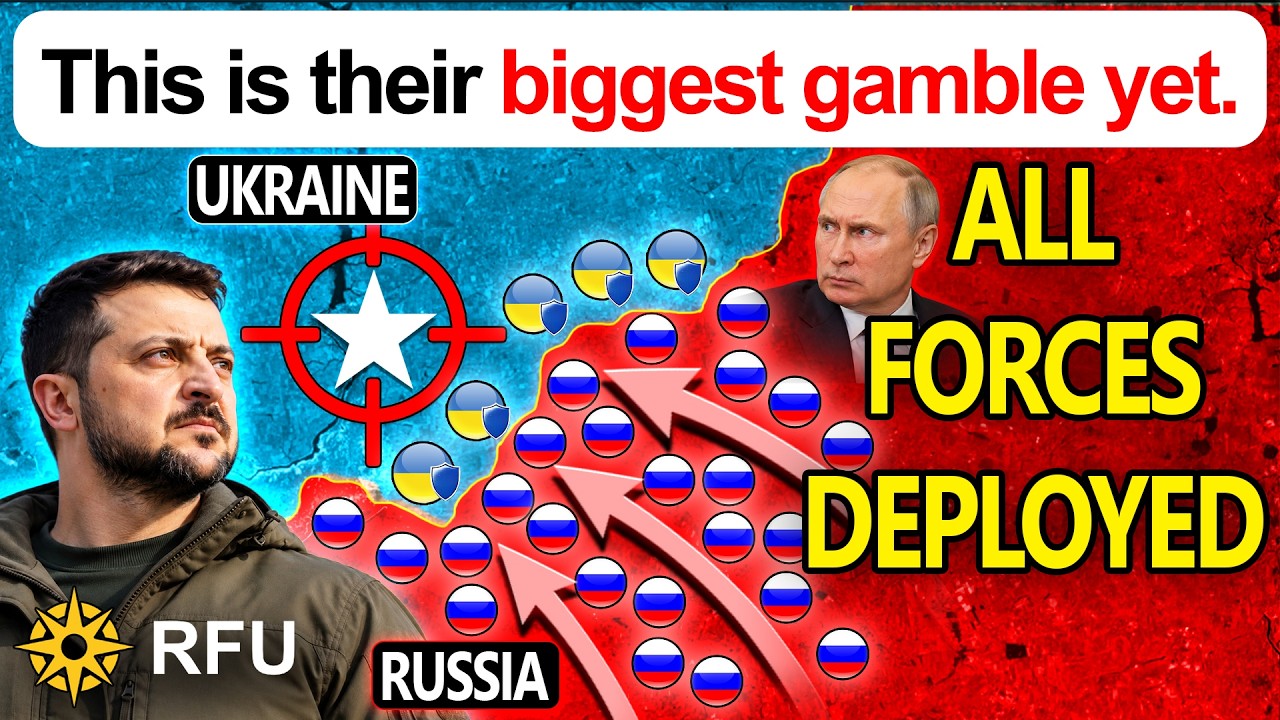
Here, Ukrainian forces have finally managed to cut off the Russian salient west of the Zherbets River by advancing from two sides. As a result, Russian forces are now pinned down in an area without being able to move in reinforcements or evacuate to the east.
Ukrainian counterattacks against both flanks of the Russian salient have narrowed the corridor connecting the Russian spearhead with its rear, leaving it dangerously exposed. Satellite imagery indicates Russian forces are already withdrawing from parts of the western salient around Shandryholove, as elements of Russia’s Second and One-Hundred-Forty-Fourth Motor Rifle Divisions now face a difficult choice: retreat east with limited chance of success or risk losing additional forces as Ukraine tightens its pressure.
The northern flank has deteriorated particularly rapidly, as Ukrainian units have gradually consolidated strongpoints between Nove and Katerynivka. Recent assaults expanded this foothold, with subsequent Russian strike footage itself indicating Ukrainian activity in areas previously under enemy control. Ukraine’s Third Corps then pushed south toward Kolodiazi, and Ukrainian troops captured an important tactical strongpoint in the forest belt north of the settlement, opening approaches toward northwestern Kolodiazi and western Ivanivka. Crucially, this advance allowed Ukrainian forces to cut the Kolodiazi-Ivanivka road completely, while simultaneously Russian forces inside Kolodiazi came under pressure from the south, creating multi-vector threats against the Russian bridgehead.
The southern flank, where Kolodiazi is located, is collapsing under similar pressure, as Ukrainian units counterattacked north of Stavky, and even Russian sources have acknowledged the increasingly dangerous situation, complaining that the entire bridgehead west of the Zherebets has become extremely difficult to sustain and is effectively cut off from the Russian mainland.
As a result, Ukraine has effectively cut the area around Shandryholove off from reliable logistical support. In an attempt to relieve the situation, Russian forces continue striking Ukrainian supply routes, but artillery and drones cannot solve Russia’s fundamental problem: its forward troops need ammunition, food, reinforcements, and casualty evacuation routes of their own.
Footage from the area illustrates what Russian logistics now face, as Russian soldiers attempting to recover wounded troops and bodies must travel along a route repeatedly targeted by Ukrainian drones. What should be a supply road has effectively become a road of death, as everyone moving toward the salient risks detection and destruction, making reinforcement increasingly expensive and evacuation equally dangerous.
However, Ukraine faces its own danger, as the advances forming the pincer are relatively narrow, meaning commanders cannot simply race forward chasing retreating Russians. Narrow penetrations can themselves become vulnerable to counterattacks against their flanks. Ukrainian forces therefore need to widen their gains, consolidate captured strongpoints, and establish secure logistics before attempting deeper exploitation or starting to systematically eliminate isolated Russian groups in the cut-off western part of the salient.
Overall, after Russia consequently risked watching its most important breakthrough in this sector dissolve, Ukrainian pressure from two sides has transformed the Russian offensive spearhead into a liability that is about to turn catastrophic. Eliminating that salient would push Russian forces back toward the river and destroy months of accumulated progress. However, this development also has strategic importance for Liman itself, because if Ukraine consolidates these gains, Russia’s northern pincer to encircle the city will effectively be broken, freeing Ukrainian resources to reinforce the city and concentrate increasingly on pushing back the Russian pincer approaching from the south.
🔴 YOU ARE MISSING HALF OF OUR VIDEOS! Subscribe to unlock all our reports and support our work: https://www.youtube.com/channe....l/UCcNB1tZYpeDetqCad
Today, the biggest news comes from the Huliaipole direction.
Russian forces are currently reinforcing the Huliaipolie axis in order to try to break the Ukrainian defense in this sector. Russia’s advantage in manpower is four to one across the wider axis and up to seven to one in the most threatened sectors. This troop concentration indicates that Russia regards the Huliaipolie direction as one of its most important fronts. Here, Russia is using its usual infiltration tactics of sending one to three soldiers at a time, who try to get behind Ukrainian lines and accumulate there, while the use of armored vehicles is minimal. To support its infiltration efforts, Russia deployed three elite Rubicon drone units, which are being rotated through the area to try to cover a wider section of the frontline.
Long-term, Russia wants to capture the left-bank part of Zaporizhzhia Oblast, including Zaporizhzhia city, the regional capital. Russia currently controls approximately seventy-five percent of Zaporizhzhia Oblast, while this figure was around seventy-three percent after the Ukrainian counteroffensive in two thousand and twenty-three. Based on this statistic and their rate of advance this year, which dropped to almost zero in this sector, it is highly unlikely that Russia can achieve its goal. Notably, Russia advanced more than twenty kilometers in two thousand and twenty-five and, by the end of the year, captured Huliaipolie. However, their rate of advance dropped to ten kilometers in two thousand and twenty-six. Given this, it would take seven years for Russia to reach Zaporizhzhia city.
In the short term, the Russian high command has tasked its forces to advance thirty kilometers from Huliaipolie by the end of October. This move would allow them to encircle Orikhiv from the north and cut it off from supplies. Given that Orikhiv is the main supply hub for the Ukrainians here, holding their defense south of the town would be significantly more difficult in case Russia manages to take Orikhiv under its control. However, this goal is also highly unlikely to be achieved in the near future as Russia struggles to make meaningful territorial gains west of Huliaipolie. Notably, the main Ukrainian defense line runs there, which took the Russians approximately eight months to gain a relatively small foothold over it. It consists of extensive anti-tank ditches, dragon’s teeth obstacles, and a series of lines of barbed wire. This is why Russia cannot conduct mechanized assaults here and is forced to rely on infiltrations. Despite getting through the first defense line, Russia still cannot use vehicles to supply its advancing forces or conduct assaults because it couldn’t dismantle the defense line enough to make it easier to pass. After getting through the defense line, which is still constantly monitored by Ukrainian drones, Russian infiltration groups have to go through vast open fields, which are mined. As a result of these conditions, Russia can barely advance here, while its losses are mounting, which has forced it to redeploy troops to try to break the deadlock.
Overall, Russia’s decision to redeploy additional troops and rotate elite Rubicon drone units to the Huliaipolie direction shows that its current tactics are failing to deliver the breakthrough the high command needs. The extensive Ukrainian fortifications, mined open fields, and constant drone surveillance mean that even if Russia redeploys troops here, they will face the same challenges that their comrades failed to overcome. This creates a costly cycle in which Russia must commit more manpower to achieve limited gains, potentially weakening other sectors as troops are diverted to sustain the offensive here. Unless Russian forces find a way to overcome these logistical and defensive obstacles, their ambitions to encircle Orikhiv and eventually reach Zaporizhzhia city will remain far beyond their current capabilities.

🔴 Our interactive news map: https://www.rfunews.com/map
🔴 Subscribe to unlock full access to the map + exclusive strategic insights: https://www.rfunews.com/pricing
Today, there are interesting updates from the Liman direction.
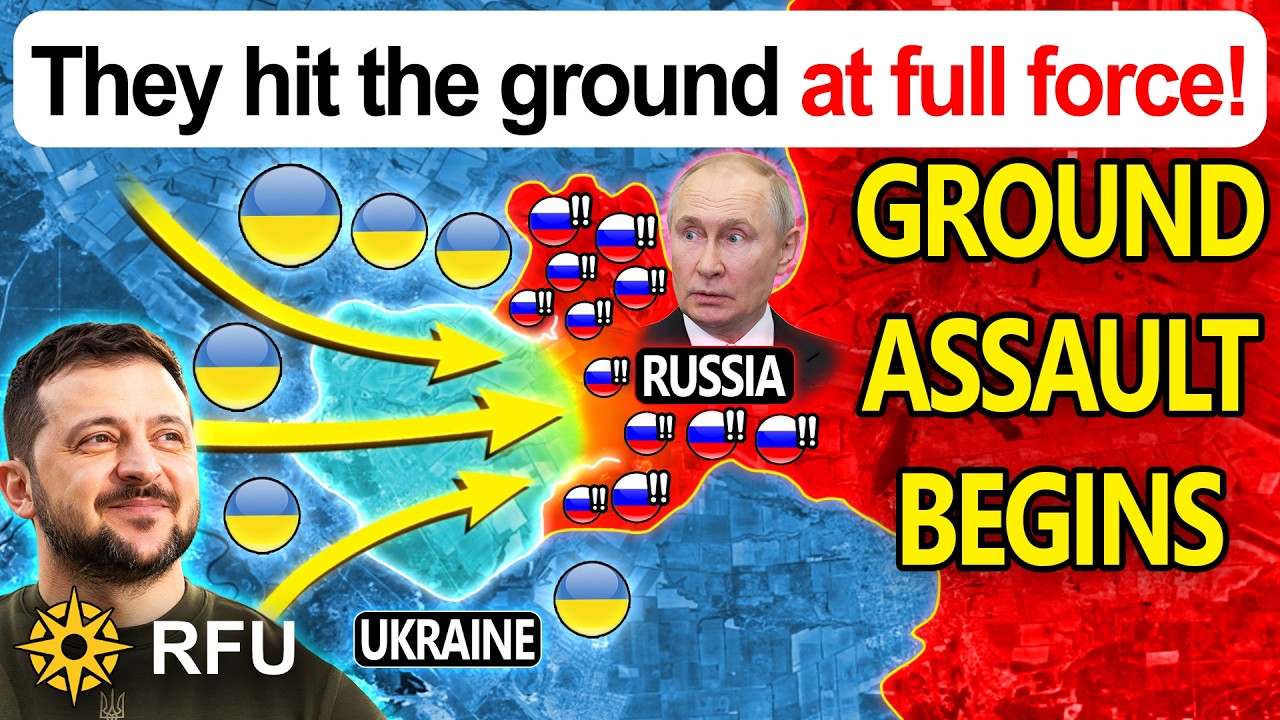
Here, Ukrainian forces launched a major mechanized assault against the Russian bridgehead north of Liman. After the Russians had spent over a year trying to outflank the Ukrainian town, the Ukrainians are threatening to starve out and collapse the entire salient in less than a month.
Russia’s lack of advance in this sector is due to it being defended by the Ukrainian Third Army Corps, so the Ukrainian command has recognized that the Russian bridgehead had become strategically vulnerable, and the Ukrainian plan switched from mere containment to cutting it off entirely.
The Russian bridgehead is supplied mainly through its northern section, where the Zherebets River is narrower, but Russian logistics are still under constant pressure from Ukrainian artillery and drone strikes. Additionally, Russian armored vehicles cannot reliably cross the river, while Russian artillery support has been degraded by persistent Ukrainian reconnaissance and counterbattery operations. Ukrainian planners identified these weaknesses and designed an operation specifically aimed at exploiting them.
The Ukrainian attack itself was meant to be launched from the north through the area around Ridkodub, where superior road infrastructure would offer Ukrainian mechanized forces an opportunity to move rapidly before Russian defenders could react. The plan called for armored vehicles to penetrate through the outskirts of the village and then advance along two tree lines that provided partial cover from Russian observation to deploy forces in the larger forested areas between Nove and Katerynivka, which can be used concealed infiltration routes into both settlements with the support of FPV, artillery fire and reconnaissance drones.
If we take a look at the topographic map, we will see that capturing this zone would place Ukrainian forces on the central high ground of the bridgehead. From that position, they could threaten Russian forces in multiple directions while simultaneously controlling the primary supply corridor feeding the entire bridgehead. If successful, the operation would place all Russian troops west of the river in a highly vulnerable position, forcing them to rely increasingly on supplies through aerial drone deliveries for sustainment. However, even that would be problematic given the fact that the Third Army Corps possesses some of Ukraine’s most capable anti-drone and electronic warfare units integrated directly into the corps structure.
Geolocated footage released by Russian units defending the sector showed how the Ukrainian assault unfolded, with Ukrainian armored columns advancing with Cobra-Two mine-resistant vehicles and Ukrainian-produced BTR-Four-E armored personnel carriers. Russian forces initially struggled to respond, with their standard FPV drones proving largely ineffective against the intense Ukrainian electronic warfare coverage shielding the attacking force. This forced Russian operators to switch to less-widely available fiber-optic drones, which are immune to radio jamming but require additional preparation and deployment time.
That delay in effective response proved critical, as the geolocated Russian footage confirms that Ukrainian forces managed to advance between three and five kilometers before the first Russian drones reached the assault groups. One video shows a Ukrainian armored personnel carrier being struck by a drone only after it had already completed its mission and was returning toward Ukrainian positions, notably after having successfully deployed its infantry dismounts.
Additional footage shows Ukrainian soldiers moving through the tree lines and establishing positions inside the contested area while Russian drones attempt to engage them. With Ukrainian releases delayed for operational security reasons, we have to rely on Russian reporting that fighting in the area remains ongoing, adding that Ukrainian troops succeeded in reaching and capturing territory that directly threatens Russian supply routes. As a result, the bridgehead is already experiencing growing logistical difficulties, and isolated Russian units may soon face a difficult choice between retreating closer to the river crossings or remaining in increasingly unsustainable positions.
Yet, official Russian sources attempted to portray the battle very differently, claiming that eighty Ukrainian soldiers had been killed within thirty minutes and that numerous Western-supplied vehicles had been destroyed. However, more reliable Russian military analysts were notably a lot less optimistic, and it was quickly revealed that some of the footage used to illustrate the supposed Russian defensive success originated from battles fought last summer over a year ago, creating a sharp contrast...

🔴 YOU ARE MISSING HALF OF OUR VIDEOS! Subscribe to unlock all our reports and support our work: https://www.youtube.com/channe....l/UCcNB1tZYpeDetqCad
Today, there is important news from the Kharkiv direction.
Here, Russia’s attempt to encircle Ukrainian forces near the border north of Kharkiv is running into serious trouble, as the Ukrainian troops have exposed a critical weakness in the Russian offensive, isolating the enemy infiltration groups that cannot survive without continuous reinforcements.
The situation became particularly dangerous around Zakharkivka, near Vovchansk, where small Russian groups infiltrated Ukrainian defensive positions. Their objective was to establish footholds that could eventually connect with other Russian advances to the east, creating an encirclement, as only a twelve-kilometer corridor would have remained available for Ukrainian forces to avoid being surrounded. Losing that corridor could threaten withdrawal routes, complicate resupply, and expose Ukrainian soldiers to attacks from multiple directions. As a result, Ukraine needed to eliminate the infiltrators before they could consolidate and threaten the western flank of the corridor.
As you may remember from a previous report, the Ukrainian response began well behind the immediate frontline, as Ukrainian drone operators concentrated on disrupting Russian logistics. Supply vehicles, reinforcement routes, and troop movements became targets, preventing infiltrating groups from receiving ammunition, food, replacements, and rotations, exploiting the fundamental weakness of Russia’s infiltration tactics. Small groups can slip through gaps in defensive lines, but controlling territory requires continuous support. Without reinforcements, an infiltration remains an isolated position rather than a sustainable breakthrough. Consequently, Russian troops attempting to complete the encirclement increasingly found themselves stranded inside Ukrainian-controlled or contested territory.
One particularly revealing operation unfolded around Zakharkivka, after Russian soldiers infiltrated it and prepared to move further forward, but Ukrainian reconnaissance identified their movement. Drone crews from the Achilles Brigade immediately launched unmanned aircraft to locate and track the group. The Russians attempted to conceal themselves inside a shelter, hoping to avoid detection and wait for an opportunity to continue their mission.
Instead, Ukrainian Achilles heavy bomber drones, supported by operators from the Astur Unmanned Systems Regiment, attacked their hiding position. The coordinated pressure forced the Russians to abandon their shelter and retreat, but escaping the building did not mean escaping Ukrainian surveillance. Ukrainian drones continued tracking the soldiers as they moved through the area, leaving them exposed and unable to reestablish a concealed position. Realizing they were surrounded by Ukrainian observation and facing further attacks, the Russians raised their hands to signal surrender.
At that moment, the Ukrainian mission changed from eliminating the assault group to capturing its surviving members. Drone operators maintained surveillance while soldiers from the Ukrainian Rangers Special Operations Forces Regiment approached on foot. The Ukrainian infantry completed the clearing operation and took the Russians prisoner. The coordinated action of three Ukrainian formations therefore prevented another infiltration group from attacking Ukrainian positions while securing additional prisoners for future exchanges. More importantly, this engagement illustrates how Ukraine is dismantling the Russian encirclement attempt, with the contested grey zone becoming increasingly difficult for Russia to hold.
Overall, the stabilization around Zakharkivka weakens the western pincer of the attempted encirclement, protecting Ukrainian movement routes and reducing pressure on the remaining corridor. Combined with stabilization of the eastern flank, this denies Russian forces the opportunity to connect their advances and trap Ukrainian troops near the border. The broader significance extends toward Vovchansk and the northern approaches to Kharkiv, where preventing Russian footholds from developing into permanent positions remains crucial. Russia’s infiltration strategy depends upon establishing positions faster than Ukraine can eliminate them, but systematic Ukrainian interdiction is reversing that calculation and trapping the Russian infiltrators, so they have no choice but to surrender in groups.

🔴 Our interactive news map: https://www.rfunews.com/map
🔴 Subscribe to unlock full access to the map + exclusive strategic insights: https://www.rfunews.com/pricing
In this video, we will analyze important developments in the Baltic Sea.
Here, Ukraine has just started to demolish Russia’s Baltic Fleet with long-range drone strikes. The targets of the devastating blow have become the warships responsible for protecting Russian tanker routes.
Recent footage shows a large-scale Ukrainian drone strike reaching beyond Saint Petersburg, more than one thousand and one hundred kilometers from the Ukrainian border. During it, Ukraine’s Unmanned Systems Forces hit a Russian corvette twice while it was undergoing repairs in a dry dock at Kronstadt. The attack is especially notable because the vessel is new and equipped with the latest anti-ship, anti-submarine, and air-defense systems. These capabilities allowed it to serve as an armed escort vessel for shadow fleet tankers transiting through the Baltic Sea. The timing of the strike was also embarrassing for Russia, as Saint Petersburg was hosting an economic forum where Vladimir Putin was expected to highlight the strength and stability of the Russian economy.
The reason why Ukrainian drone operators targeted the vessel is exactly its role in escorting tankers belonging to Russia’s shadow fleet through international waters, including the English Channel. By degrading the combat capabilities of the Baltic Fleet, Ukraine can deprive Russian cargo vessels of receiving naval escorts, a key element of Russia’s plan to deter sanction enforcement by European countries. With the limited number of ships Russia has to fulfill this role, each successful strike cripples Russian abilities to do so further. At the same time, the strike also broadens opportunities for international pressure on Russia as the effectiveness of its navy declines, so European countries can intercept the undefended Russian oil tankers without any risk of escalation. For example, French authorities capitalized on the lack of armed escorts and boarded a tanker linked to the shadow fleet and detained its captain.
The significance of the strike is that it affects the protection of tankers starting from Russia’s Baltic ports, which have become the primary export points for Russian oil. Despite also being targeted by the Ukrainians, they are still regarded as slightly more secure than those in the Black Sea, which is under Ukrainian fire control with naval and long-range drones. Now, Russia exports approximately fifty percent of its seaborne crude oil from its Baltic Sea ports, which makes it heavily reliant on this route. However, the oil tankers going through here need to be escorted by warships to dissuade interception at sea by Ukraine’s European allies, which has been happening increasingly often. Notably, the Russian naval escorts create an effective political deterrent against boardings at sea, proven by the track record of unhindered passage of Russian tankers through European waters.
Since the end of March, approximately three hundred vessels from Russia's shadow fleet have transited through British waters, most of them via the English Channel. Despite this, not a single vessel was stopped or inspected, leading Russian commentators to boast that European countries are unwilling to intervene, and the presence of even a single Russian escort warship was enough to deter them. However, the Russian Baltic Fleet losses will change this balance of power in Europe’s and Ukraine’s favor because Russia will increasingly be unable to project power.
By targeting Russian warships and reducing their number, Ukraine is indirectly making it easier for Nato countries to take action against vessels associated with Russia's shadow fleet. Here, Ukraine is using the same strategy as it did in the Black Sea, where approximately thirty percent of Russia’s fleet has been destroyed since two thousand and twenty-two. Notably, this follows the same pattern as it is not the first successful strike against Baltic Fleet assets. At Primorsk Port, Ukrainian forces damaged a guided-missile corvette and a patrol boat. In another attack, Ukrainian drones struck a patrol icebreaker, which is a dual-purpose vessel used by the FSB Border Service that combines military capabilities with icebreaking functions.
Overall, these strikes contribute to a steady erosion of Russia's naval capabilities in the Baltic region. As a result, Russia has an increasingly limited pool of warships that can be assigned to escort and protect vessels linked to its shadow fleet, enabling European countries to intercept sanctioned Russian vessels. The ultimate target is not the ships themselves, but Russia's ability to protect oil exports and generate revenue for the war effort.

💎 Help us expand the coverage! Subscription starts from just $4.99! Get 50% OFF full access to the map + exclusive strategic updates: https://www.rfunews.com/pricing
Today, the biggest news is coming from the Kharkiv region.
Here, Putin is going to snap as his most recent major victory over Ukraine is turning into yet another humiliating defeat.
With Ukrainian assault groups advancing further into the Russian advances and dismantling their pincer efforts, Russians are panicking once again. Their objective of encircling thousands of Ukrainian soldiers against the international border has collapsed, as Ukrainians are breaking open ground lines of communication into the beleaguered pocket.
Currently, in addition to intensifying their shelling efforts, Russians are trying to rush in reinforcements to try and break the Ukrainian assaults and gain back control of the situation. However, Ukrainians are striking Russian deployment points before they even manage to cross the border into Ukraine. Geolocated footage shows a column of six Russian military vehicles attempting to deploy forces inside an abandoned poultry farm just across the border. Ukrainians followed Russian movements and tracked precisely which buildings they had entered. Then, the shelling commenced, with explosions tearing apart the large facility from all sides. FPV drones with extended range were launched, likely from mothership drones, to chase down Russian infantry that had managed to dismount. The drones also ensured that the Russian vehicles were destroyed, as a hit on a fuel truck caused the entire building to engulf in flames.
With their rear areas coming under intense Ukrainian pressure, Russian forces failed to even launch any significant counterattacks against the advancing Ukrainian forces. As a result, the corridor that Ukrainians had broken open remained as such.
Looking at the bigger picture, this is the sixth time that Russians claim to have achieved a major victory, before Ukrainians humiliate them by dismantling the Russian fantasy bit by bit. At Stepnohirsk, Uspenivka, Komar, Liman, and Kupiansk even twice, Russians suffered major defeats and extensive public backlash after overexaggerated claims of Russian advances. After suffering several major defeats at the hands of Ukrainians in such a short amount of time, the image of the Russian army and Putin himself by extension, is crumbling for everyone to see.
The reason they’re faking so many major victories is that in reality they are failing to advance or achieve their goals on so many fronts. Therefore, Russians need to keep the illusion of a constant Russian advance and inevitable victory alive through other means. Predominantly, this is done through smaller fake advances by infiltrating deep behind Ukrainian lines and waving around the Russian flag, which does not equate to any real territorial control. Often this also does not even have a meaningful impact on cutting Ukrainian supply lines, as Ukrainians have often shown flag-wavers to survive not even an hour after filming their videos, with other flag-waving videos being revealed as made by AI.
The problem however is that repeated faking of advances eventually leads to the illusion collapsing under its own weight. Notably, in the most extreme cases, the frontline maps shared and used by Russian military command show areas more than twenty kilometers from the real Russian area of control. Aside from creating major problems in delivering accurate orders and fire support, the events here show that it leads to massive public defeats as well. Russians had already claimed that they had encircled Ukrainians in a four-hundred-thirty square kilometers large pocket. This would have been the single largest encirclement of Ukrainian forces in years, and the largest Russian territorial advancement since the Russian advance from Avdiivka to the approaches to Pokrovsk, which still took Russians over a year to complete. With the reality on the ground failing to live up to these excessive Russian claims of victory, Putin himself is left humiliated by the failures and setbacks on the frontline in Ukraine, with the Russian army’s capabilities visually deteriorating with every day that passes.
Overall, Ukrainians once again unmasked a major Russian façade on the frontline. Claiming an encirclement of over four-hundred-thirty square kilometers before it was actually completed was the latest in the series of Russian media victories that Ukrainians dismantled piece by piece. With Russian forces being beaten back, and their counterattacks destroyed before they could even launch, Russian commanders won’t be able to salvage their situation. As repeated military failures build up, an upcoming command reshuffle will undoubtedly result in record sales for Russian window makers.
